BACK TO WORK
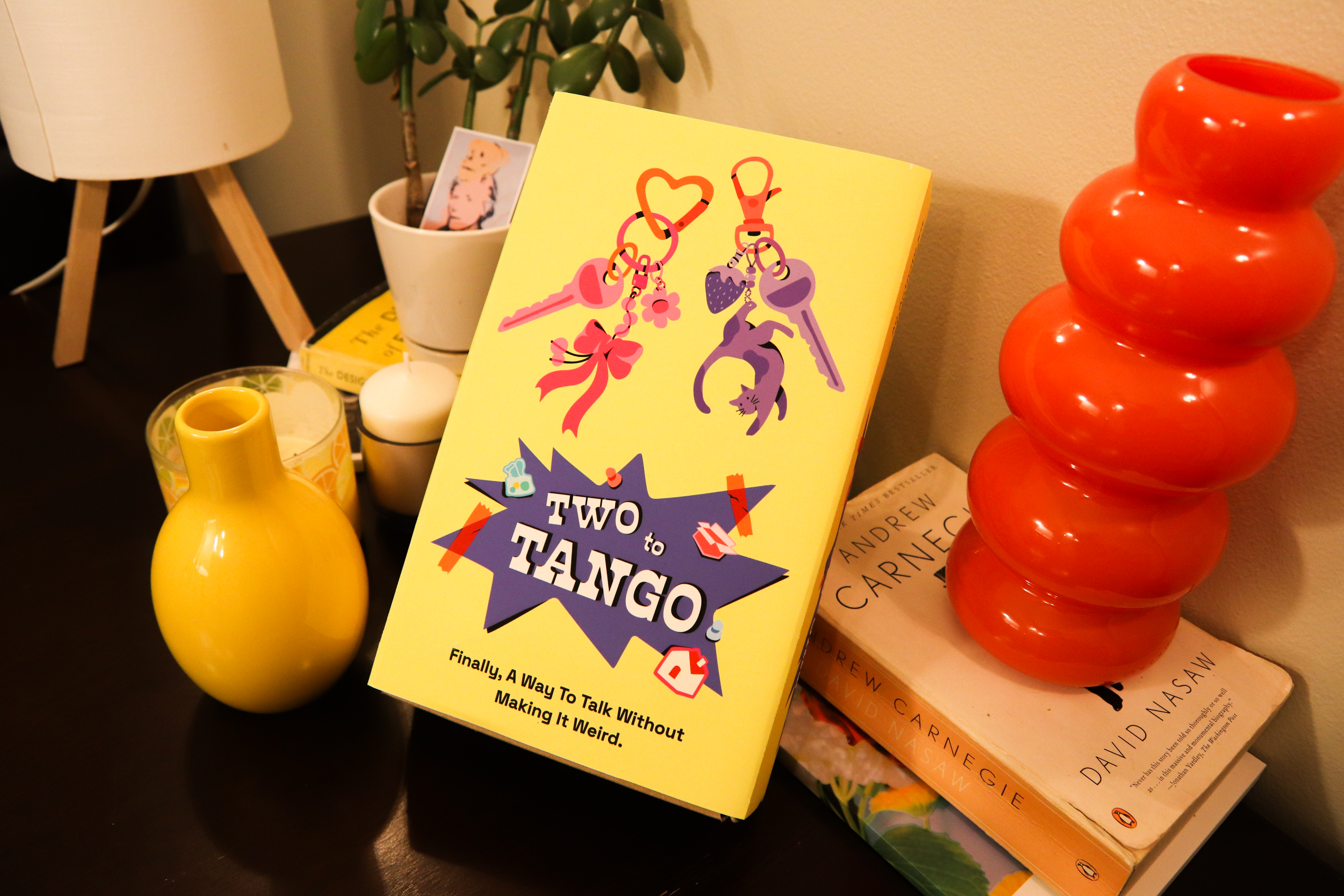
TWO TO TANGO
Pittsburgh, PA
Designed a toolkit to help undergraduate roommates navigate conflict and build healthy communication patterns
Role: UX Designer
My Contributions: Led entire research phase, directed research synthesis, led ideation phase, designed and developed web application.
Team: Two designers (Cameron Fahsholtz, Adrija Haldar)
Duration: November 2025 to December 2025



PROBLEM
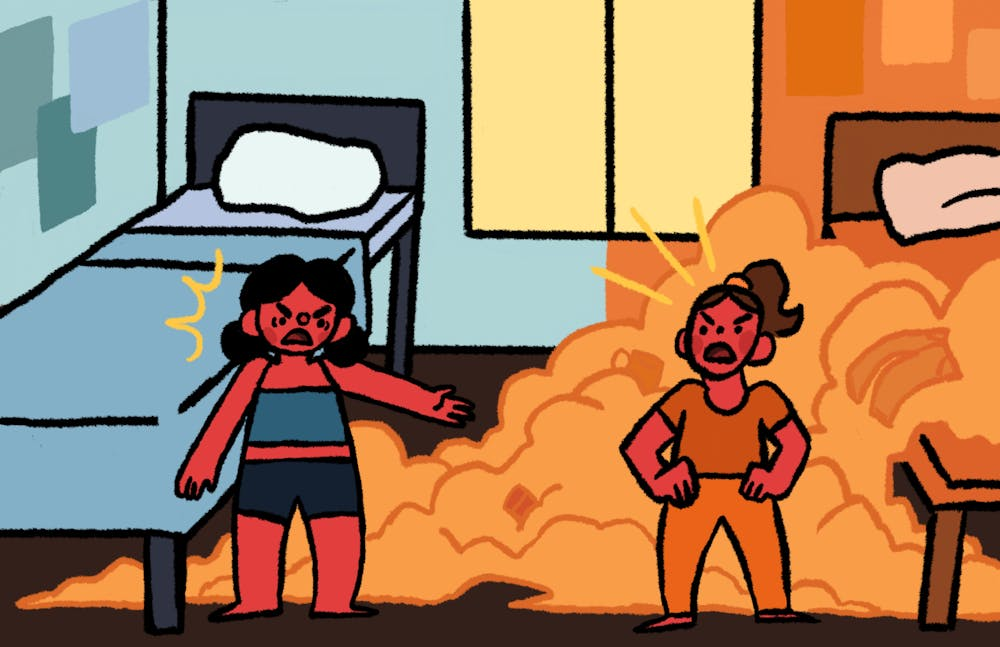
University students know communication is key to resolving roommate conflicts, but they struggle with how to actually do it. When strangers move into shared housing, they bring unspoken expectations shaped by different backgrounds. These differences only become visible through cohabitation, creating inevitable friction.
Students face a critical gap: they know what they should communicate during conflicts, but have difficulty initiating conversations and don't know how to have them without making things worse. As a result, issues escalate, living environments become uncomfortable, and relationships deteriorate.
GOAL
Help roommates initiate and navigate difficult conversations about conflict.
OUTCOME
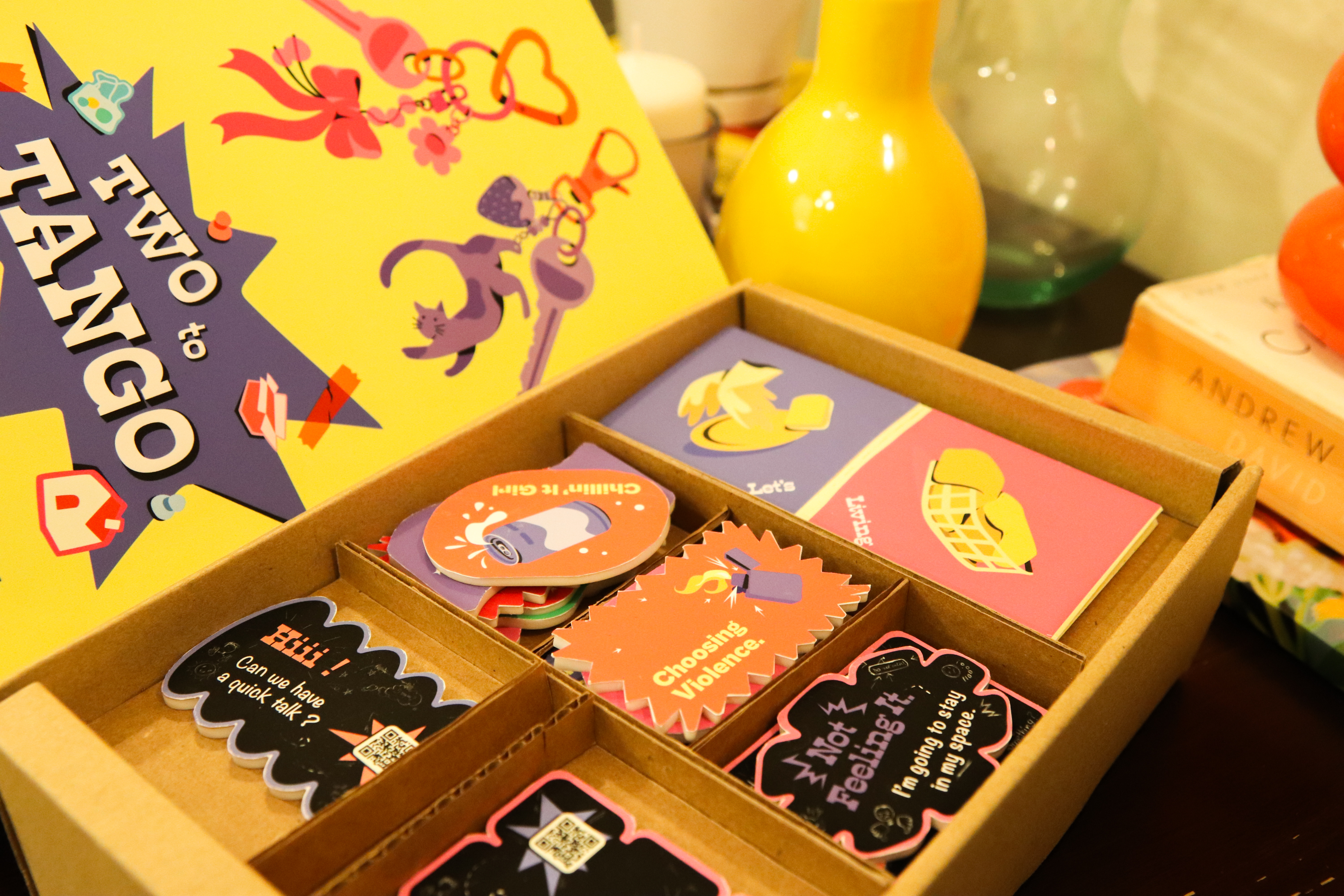
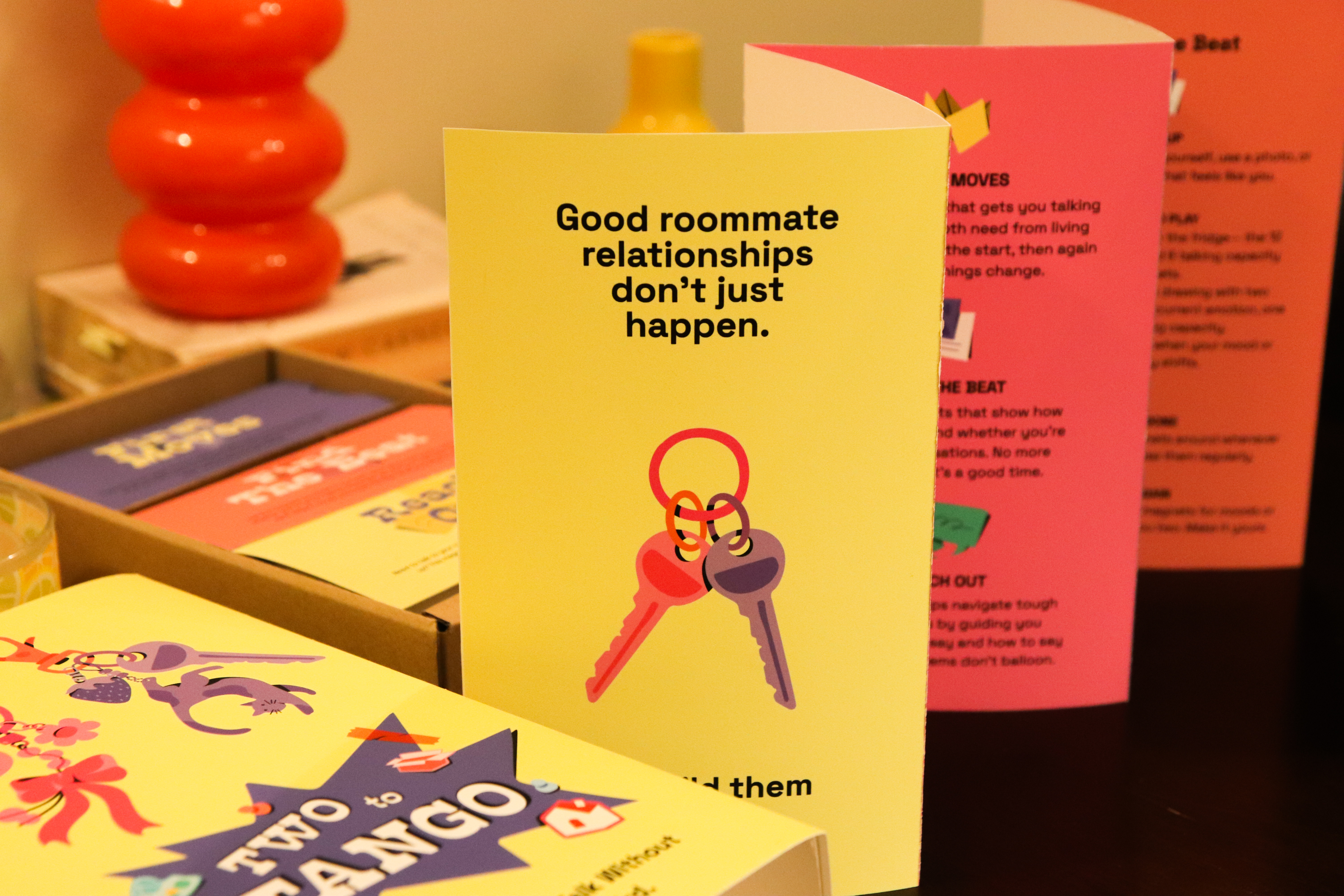
We designed TwoToTango, a three-part physical toolkit that lowers barriers to difficult conversations. The toolkit works throughout the roommate lifecycle, from move-in to daily living to conflict moments, providing structured, low-stakes ways to establish communication methods, build relationships, and address issues before they escalate.
RESEARCH METHODS
Led entire research phase (initial interviews, conflict mapping study, expert interviews), directed research synthesis and insight generation
INITIAL INTERVIEWS
Led 8 semi-structured interviews with CMU students about their last roommate conflict. Developed protocol focusing on retrospective conflict analysis and decision points where communication could have changed outcomes.
EXPERT INTERVIEWS
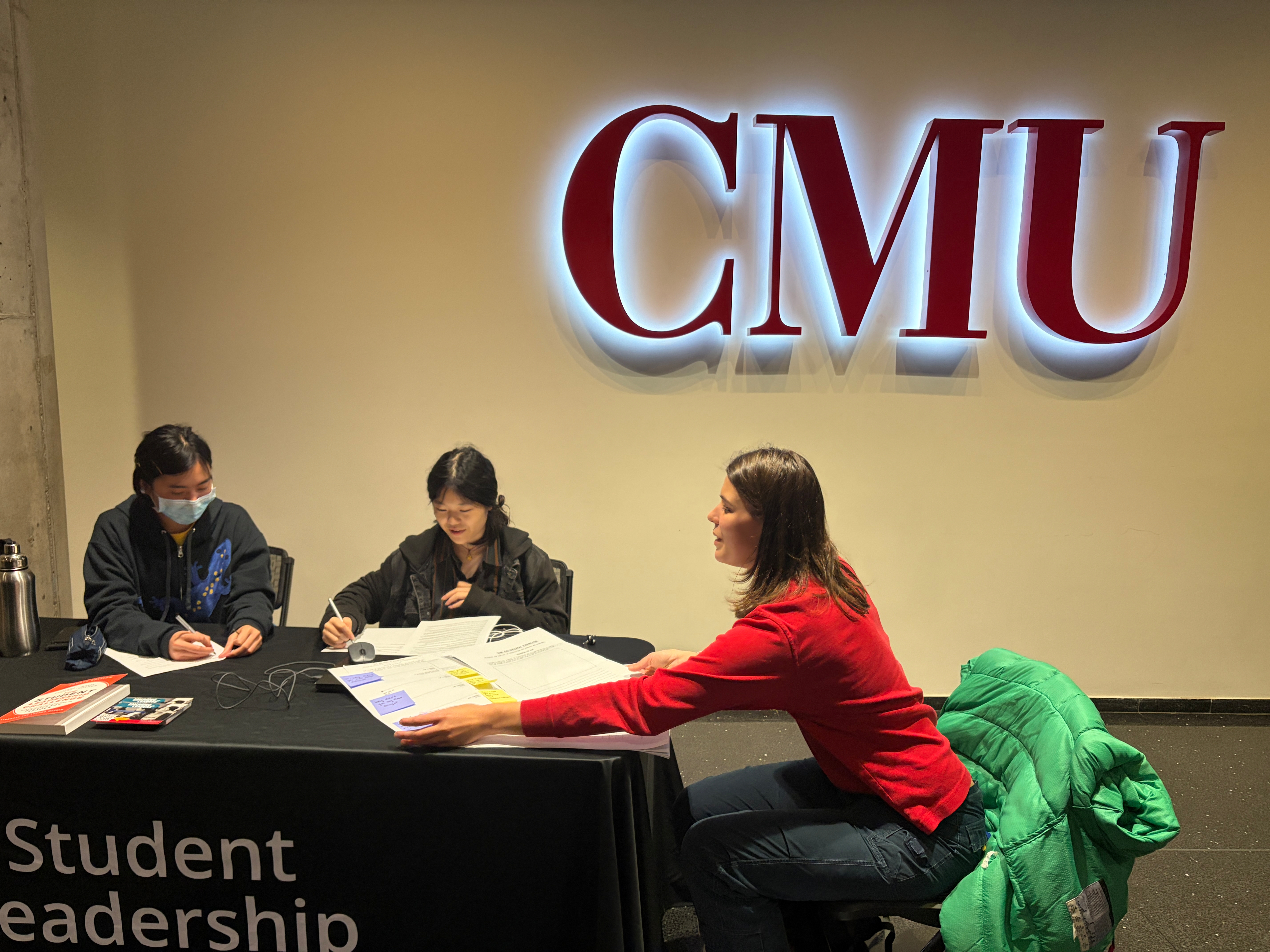
Interviewed 4 experts in conflict resolution, communication theory, and roommate dynamics to understand why students struggle with these conversations.
CONFLICT MAPPING STUDY
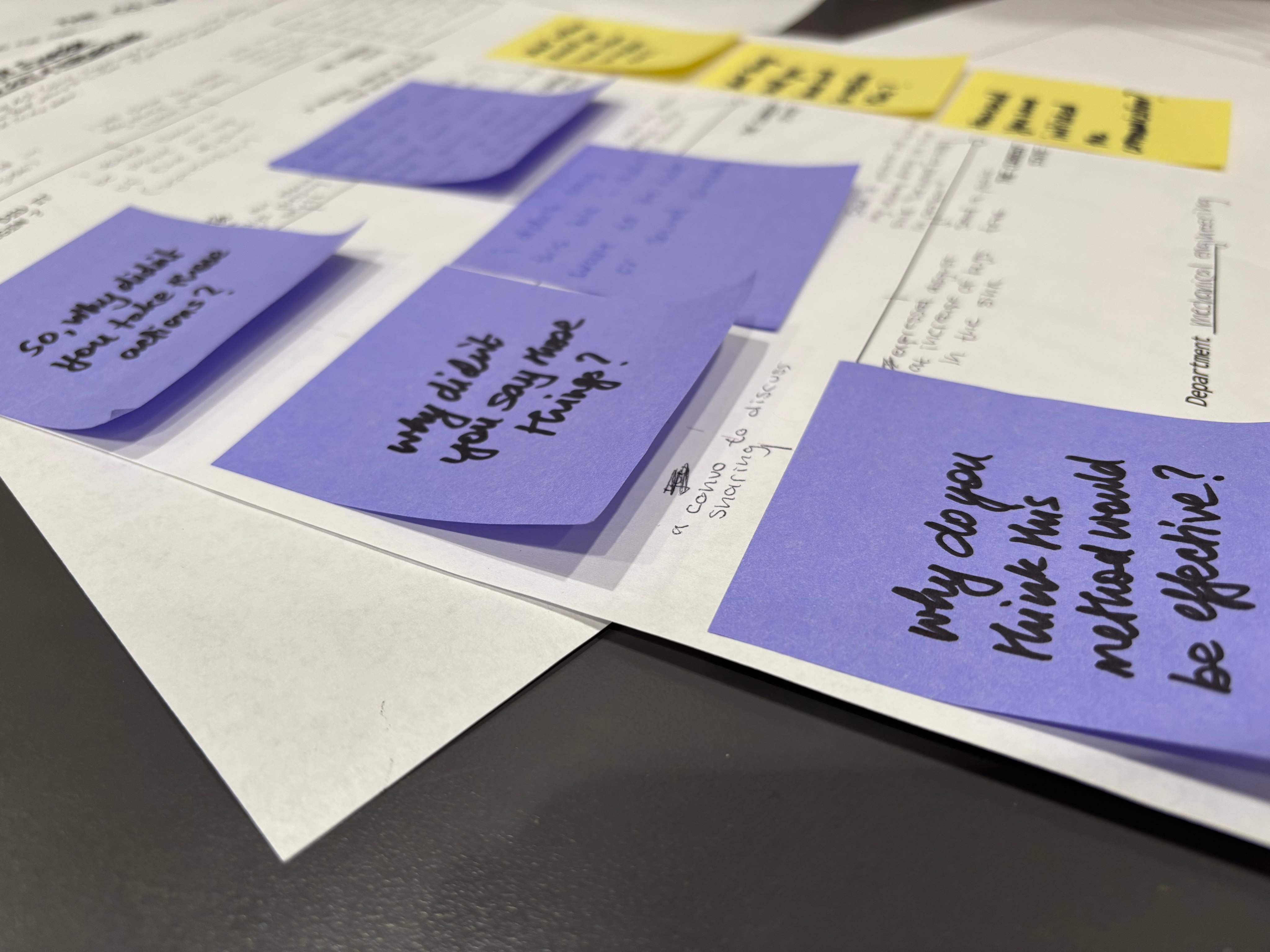
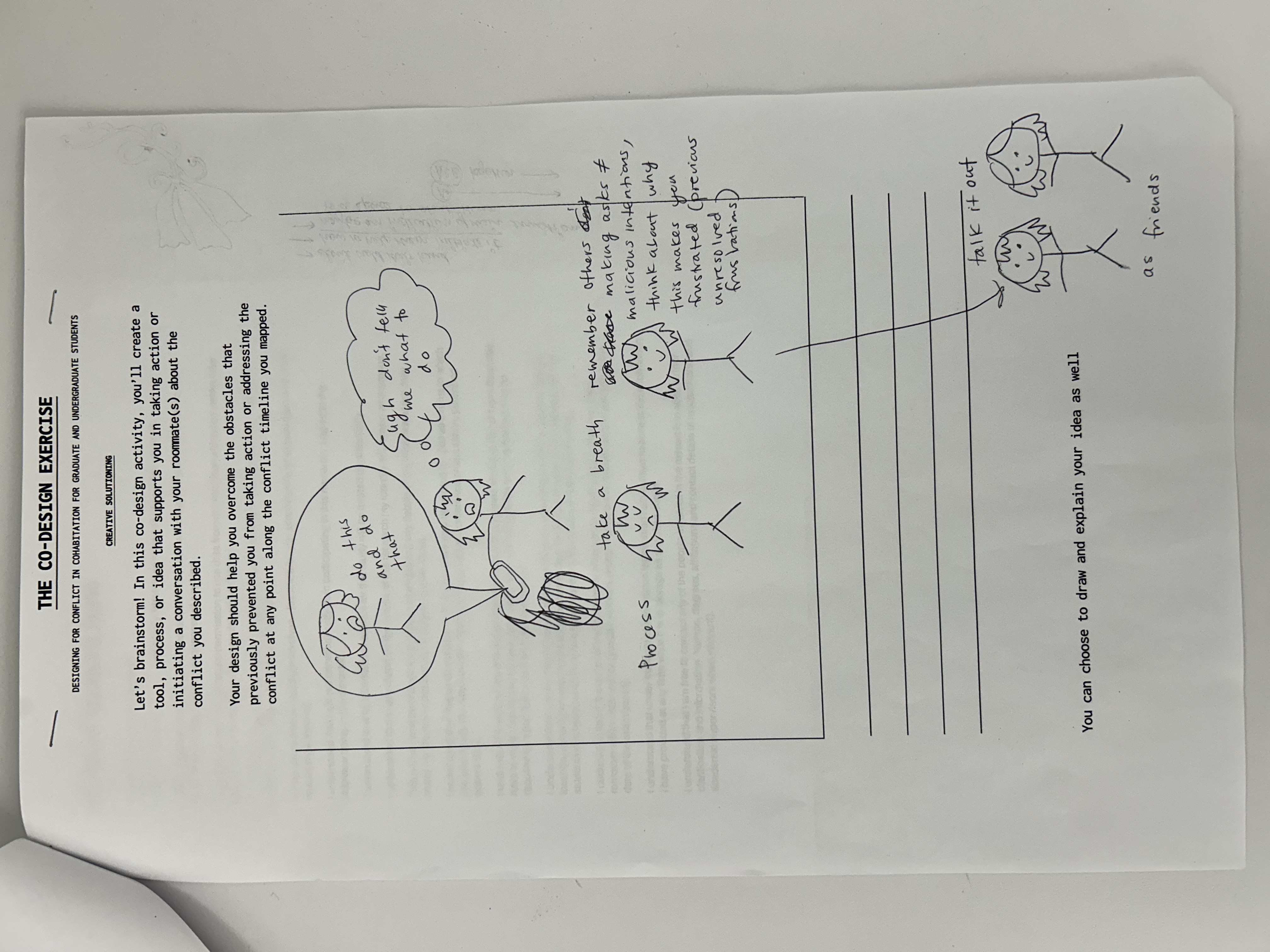
Designed and led conflict mapping exercises with 10 CMU students, creating a visual research method where participants mapped their last conflict on a timeline, highlighting key issue points, what they could've done differently, what they should've said, and why they didn't.
KEY INSIGHTS TRANSLATED TO DESIGN REQUIREMENTS
THE COMMUNICATION PARADOX
Every student could articulate what they should have communicated—the problem was execution, not knowledge.
Design Requirement: Encourage roommates to communicate effectively by lowering barriers to action.
THE INITIATION &
METHOD GAP
Students struggled to initiate conversations without creating confrontation. Average time between noticing an issue and addressing it: 2-3 weeks.
Design Requirement: Support roommates through low-stakes, structured entry points that reduce emotional cost.
ONE-SIZE-FITS-ALL WON’T WORK
Students have different conflict styles across the Adaptation vs. Confrontation Spectrum.
Design Requirement: Provide multiple interaction points for different communication preferences.
INVESTMENT DRIVES RESOLUTION
Roommate pairs with early shared goals and relationship foundations navigated conflict more successfully.
Design Requirement: Help roommates build their interpersonal relationships through shared activities at move-in.
IDENTIFYING INTERVENTION POINTS
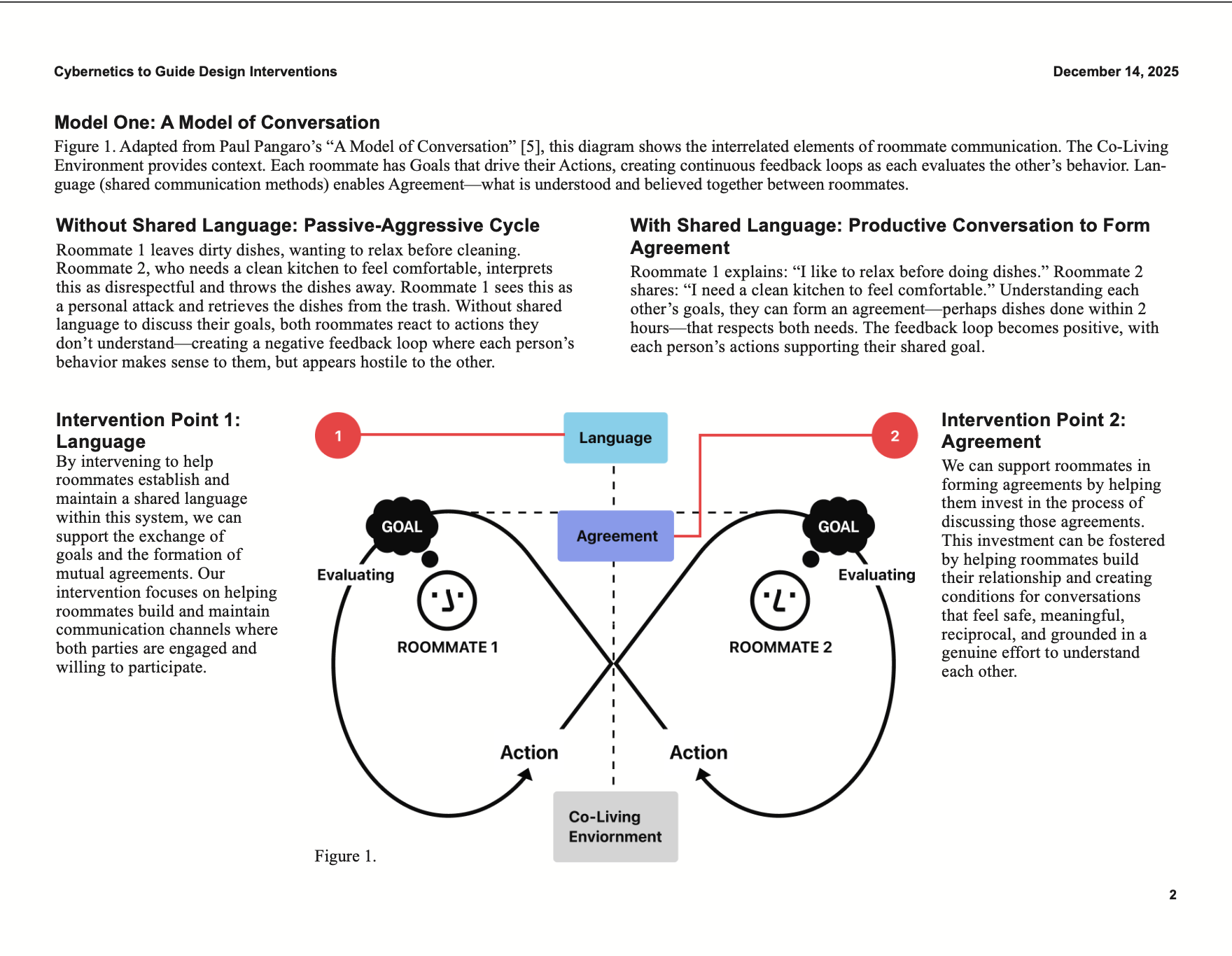
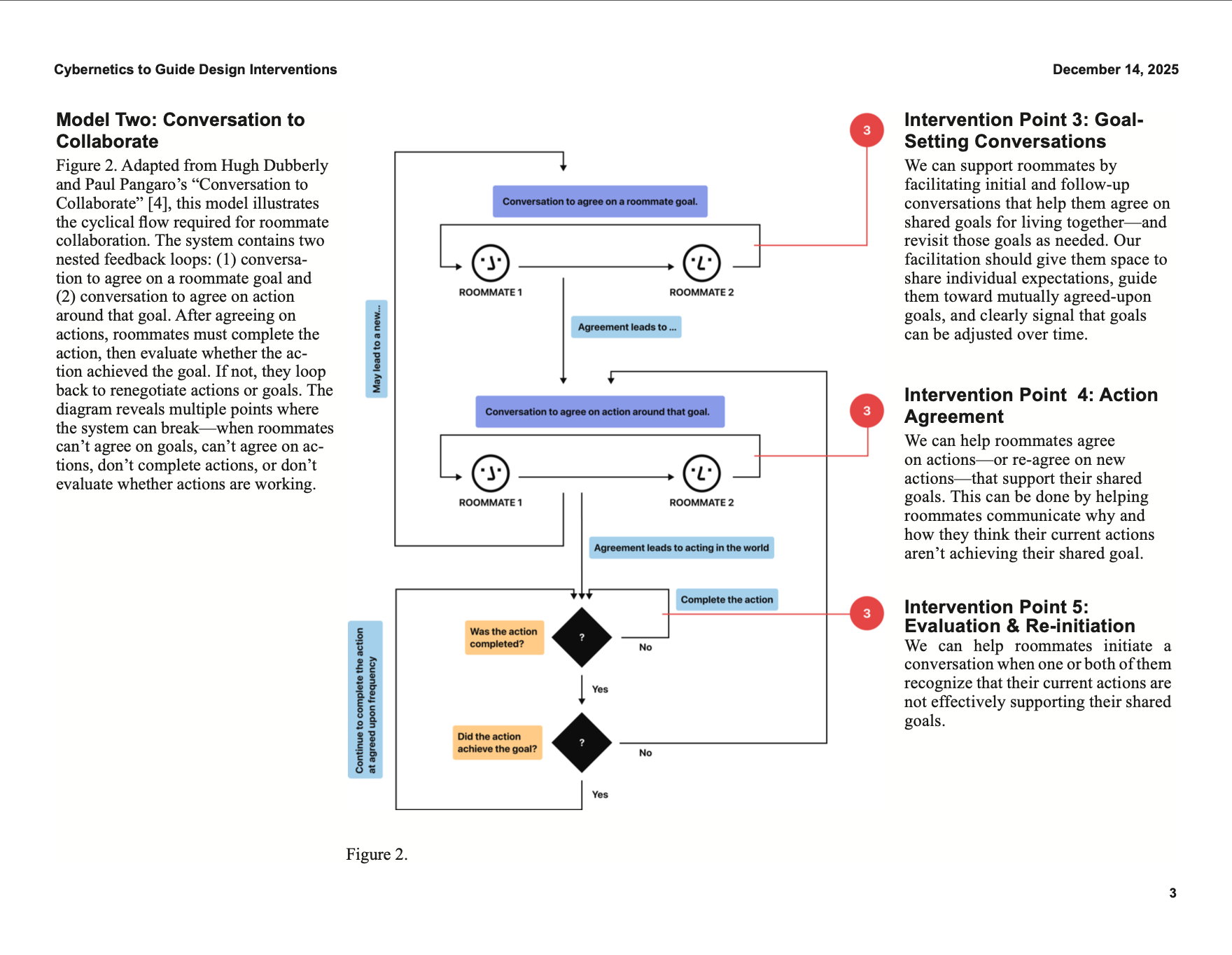
I adapted two cybernetics models by Paul Pangaro, identifying research-backed intervention points. My paper, Using Cybernetic Methods to Guide Designer Interventions in Roommate Communication for Conflict Navigation, is available here.
MODEL ONE: A MODEL OF CONVERSATION
MODEL TWO: CONVERSATION TO COLLABORATE
DESIGN PROCESS
I collaborated with a teammate, focusing on UX while they led visual design.
USER ARCHETYPE CREATION
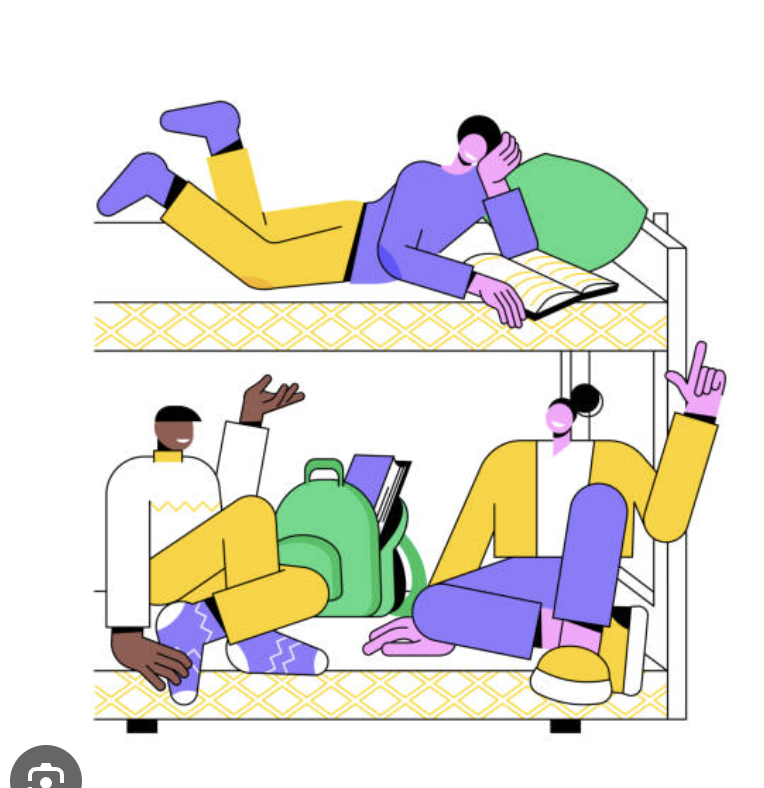
We created the "Learning Roommate" archetype based on research patterns.

Archetype
Learning Roommate
Background
A college student living away from home for the first time, learning how to communicate and share space.
Needs
They need a comfortable living environment where they feel at ease.
Behaviors
They are willing to build a roommate relationship and work with their roommate to navigate conflict.
HI-FI PROTOTYPE
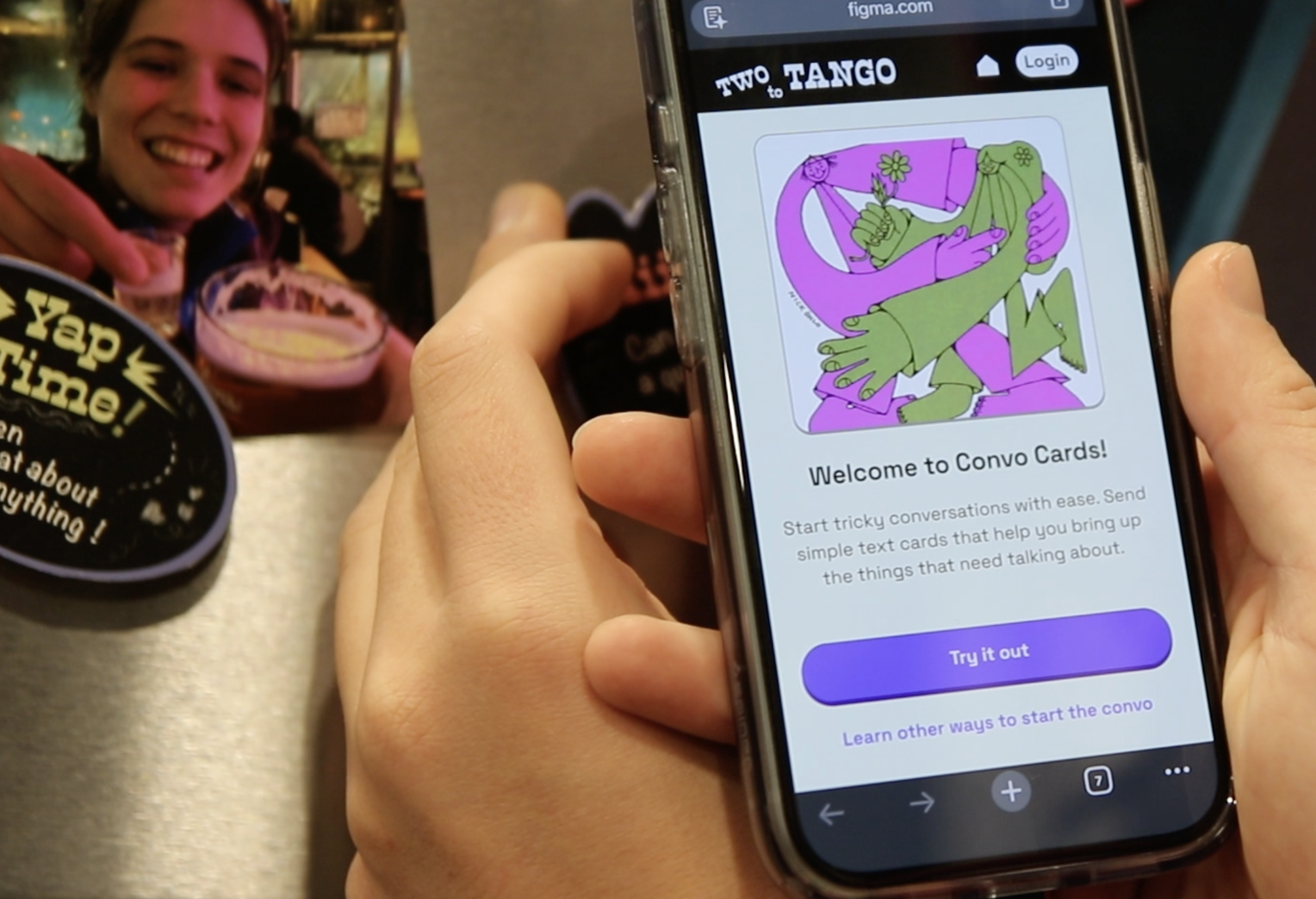
We developed functional prototypes across both physical and digital formats.
DESIGN REFINEMENT
Through critique and iteration, we refined concepts into three core toolkit components.
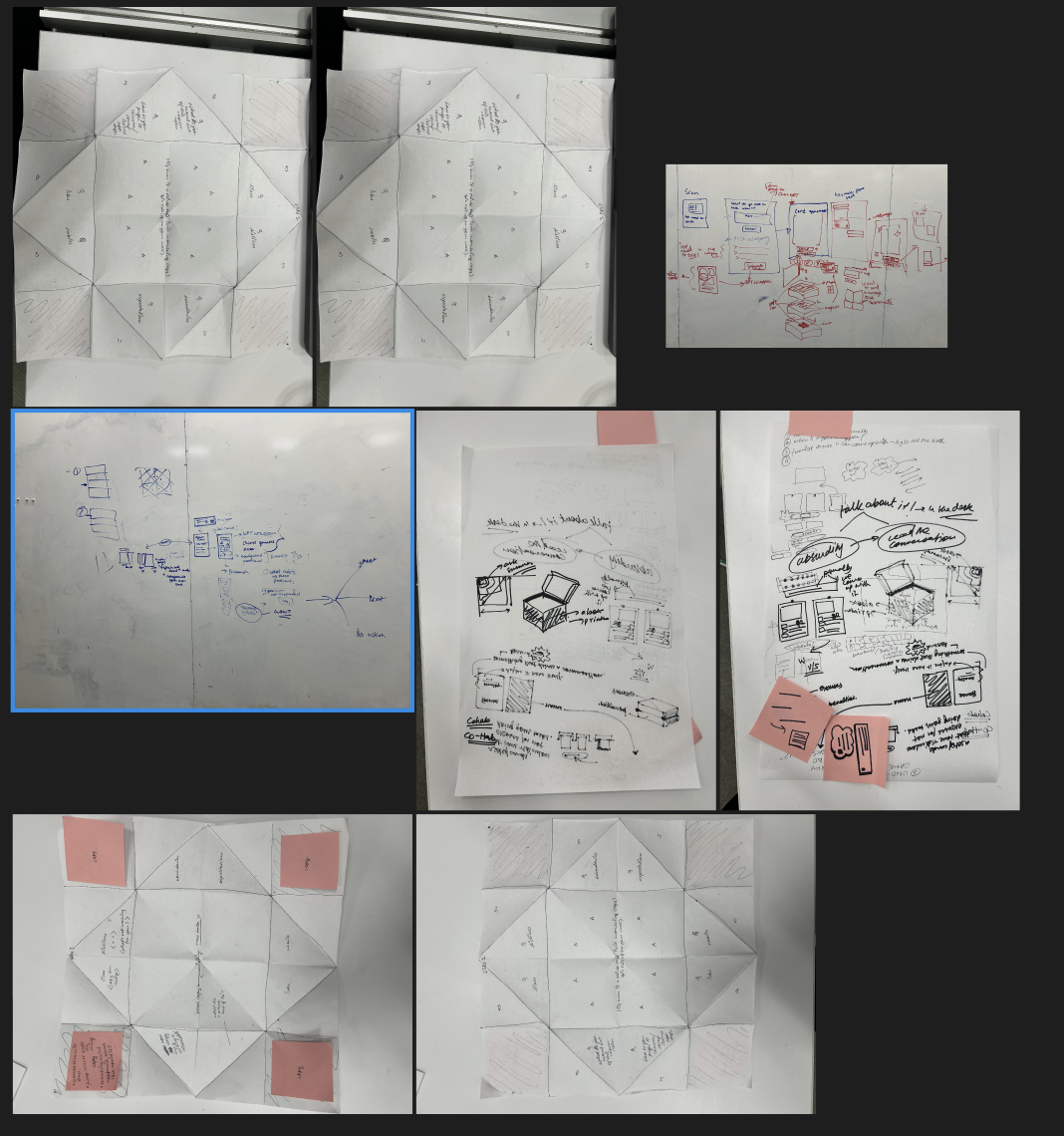
EARLY ITERATION
We explored activity concepts across different lifecycle moments.
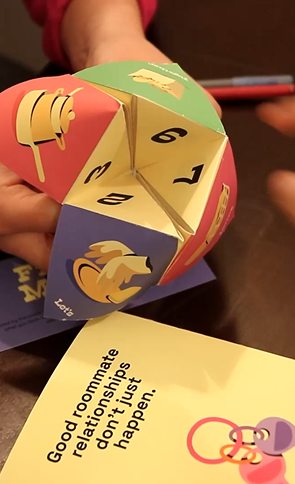
KEY SOLUTION COMPONENT: FIRST MOVES
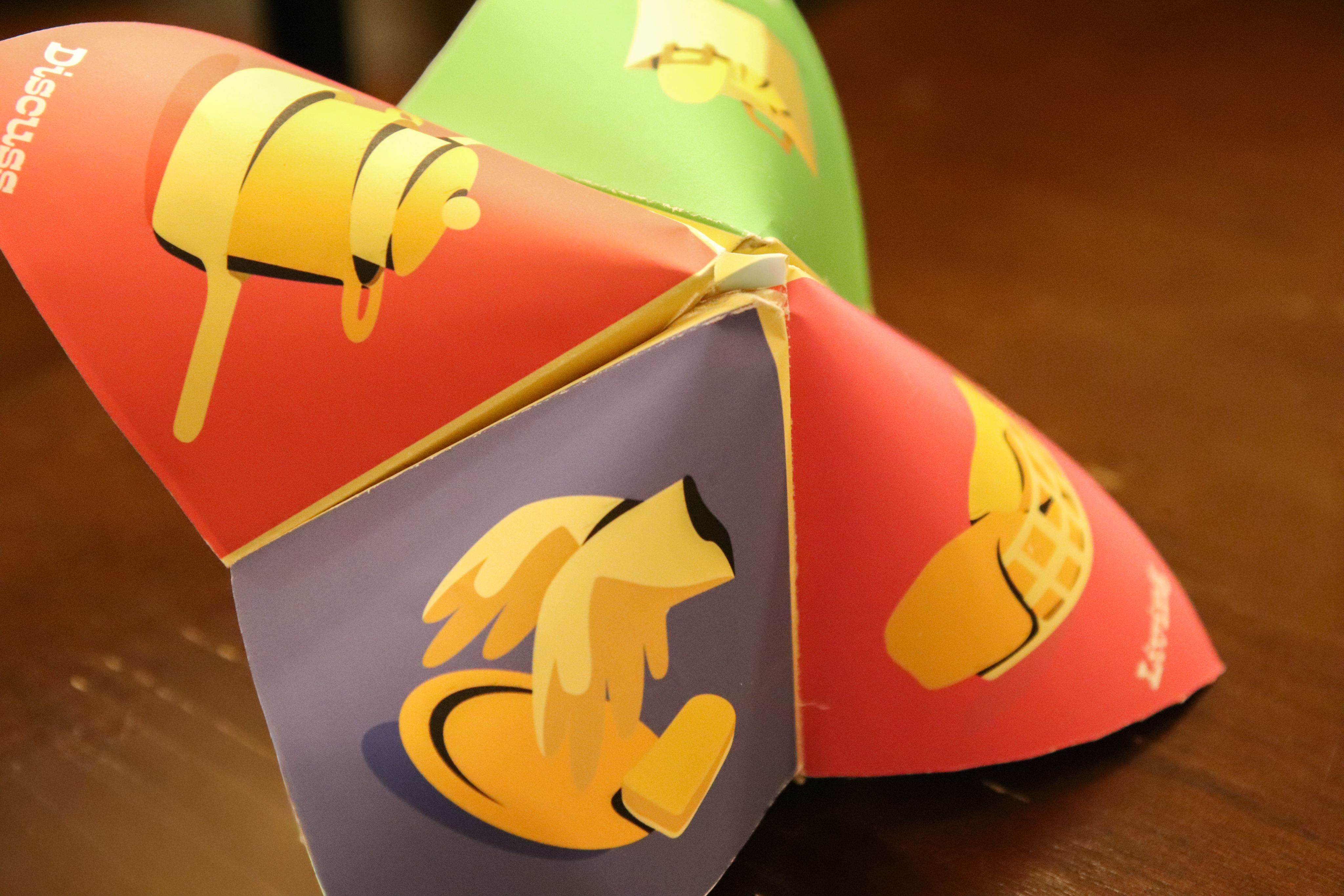
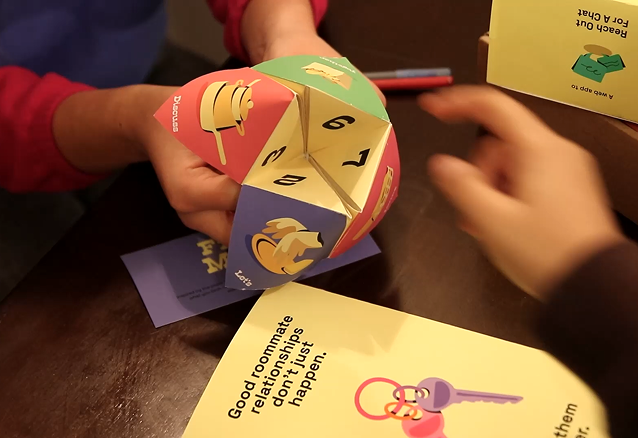
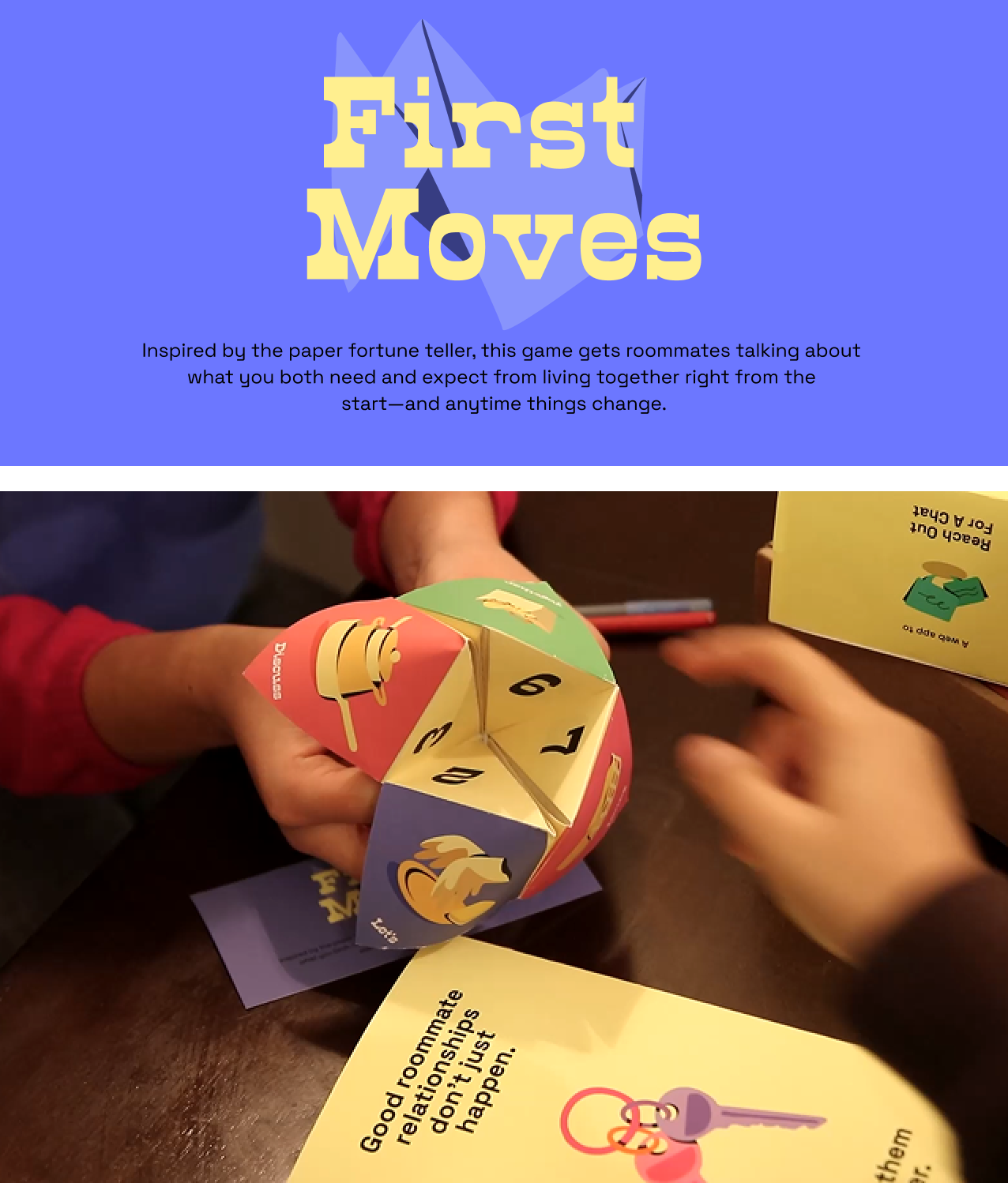
An interactive fortune-teller game that supports early goal- and expectation-setting.
RESEARCH FOUNDATION
Addresses initiation gaps and relationship investment through a playful, structured entry point for awkward conversations.
HOW IT WORKS
- Play at move-in to establish initial goals and communication preferences
- Replay when things change to reestablish shared understanding
SUPPORTS
Goal-setting intervention point
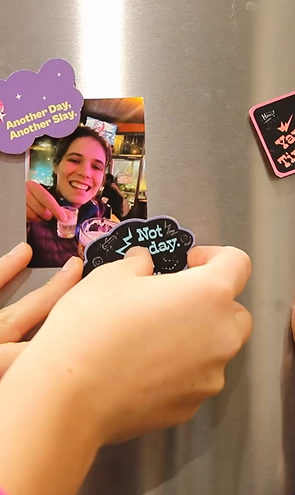
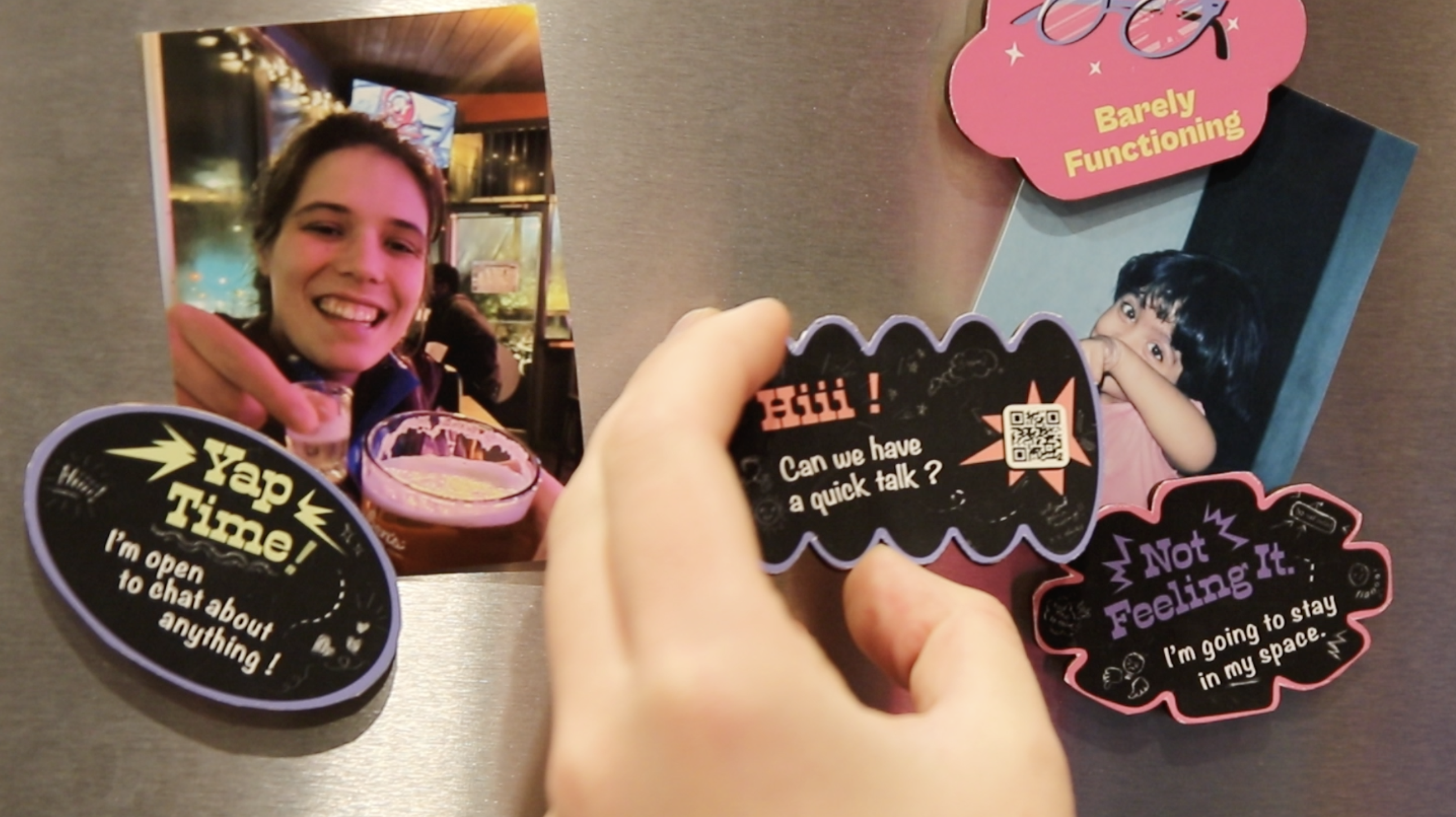
KEY SOLUTION COMPONENT: FIND THE BEAT
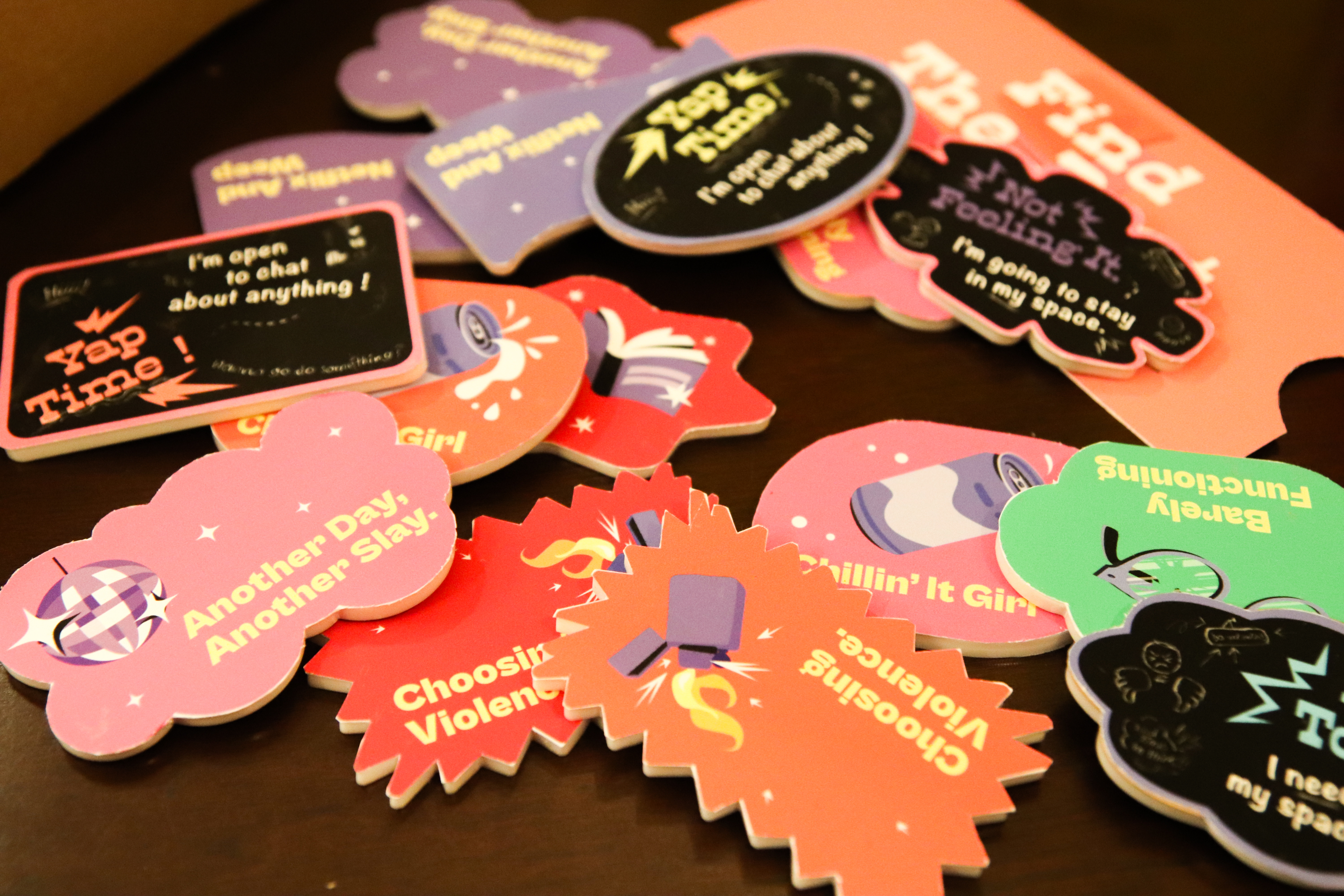
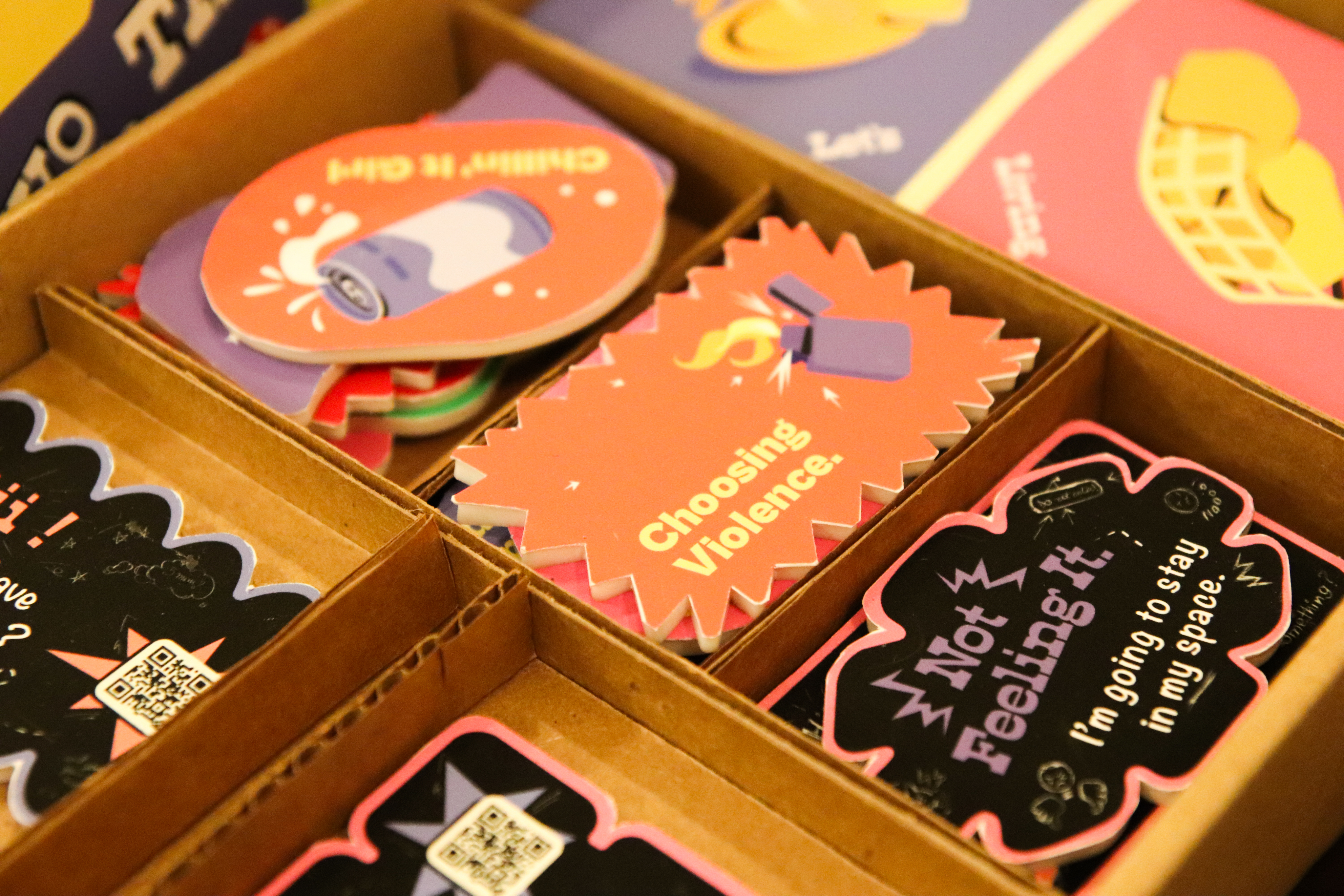
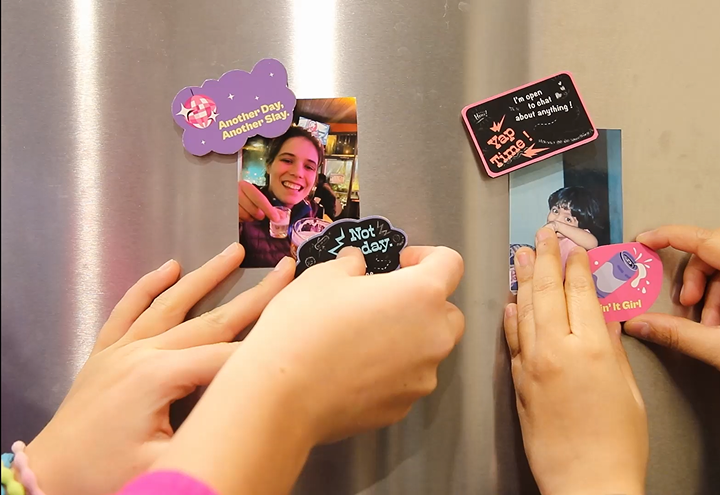
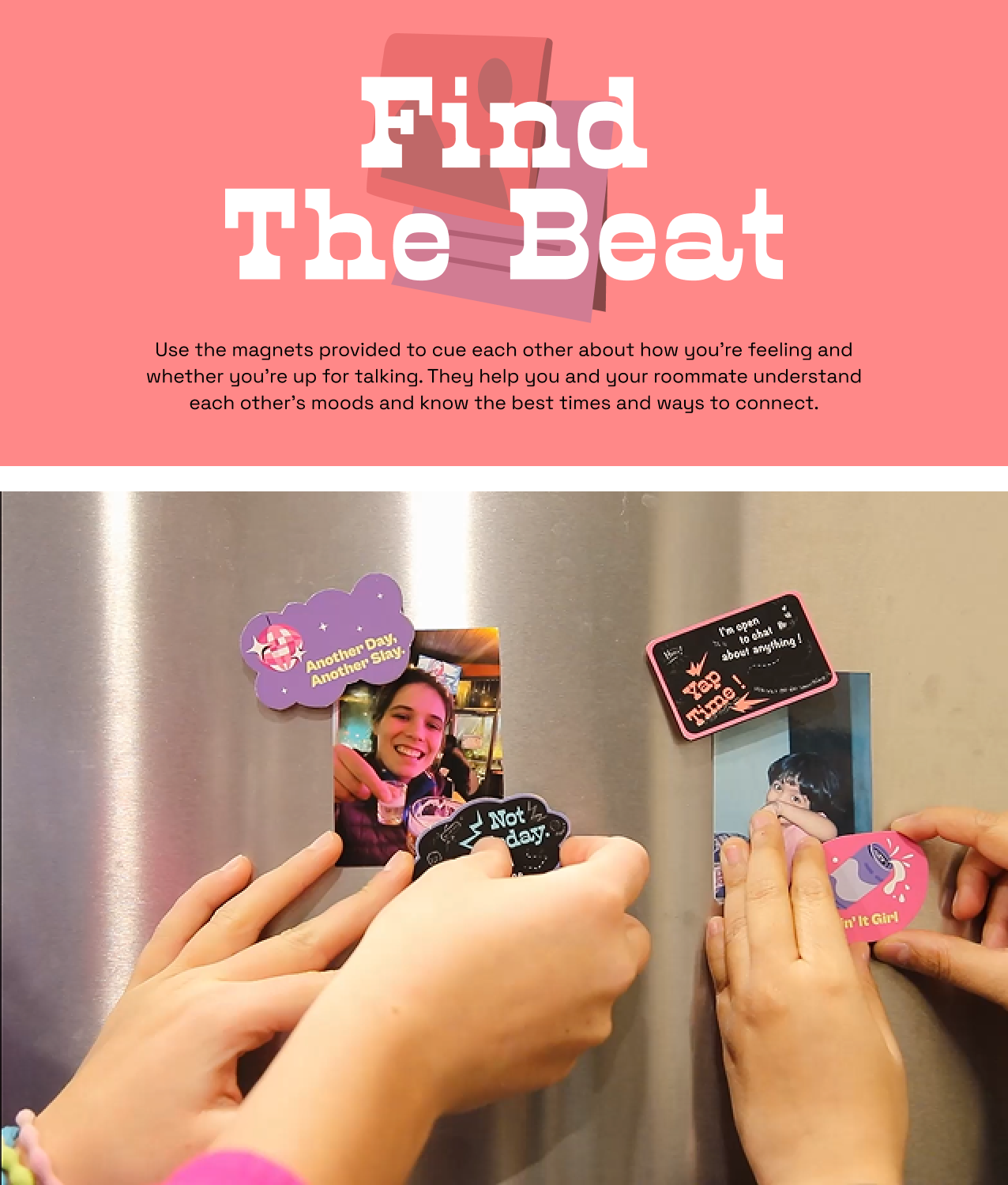
A set of magnets that cue emotions, understanding, and capacity to talk.
RESEARCH FOUNDATION
Addresses when to initiate conversations and supports diverse communication styles. Students often wanted to talk but weren’t sure if their roommate was receptive.
HOW IT WORKS
- Each roommate has magnets showing 6 emotions and 3 conversation capacities
- Used daily on visible surfaces to passively communicate mood and openness
- Reduces effort to check in and fosters ongoing emotional awareness
DESIGN RATIONALE
Passive magnet signals enable continuous, low-effort communication without adding verbal pressure. Magnets were chosen for their constant visibility, dorm integration, and unavoidable presence.
SUPPORTS
Daily relationship maintenance and understanding, informs timing for action negotiation
KEY SOLUTION COMPONENT: REACH OUT
A magnet with a QR code linking to a web app that helps start difficult conversations.
RESEARCH FOUNDATION
Addresses students’ uncertainty about how to approach conflicts by providing structured conversation frameworks.
HOW IT WORKS
The magnet signals when someone wants to talk, and the QR code in the shared space links to a web app where users can send conversation cards to their roommate.
DESIGN RATIONALE
Pre-written frameworks ease hesitation and improve communication. The magnet and QR code provide a visible, easy entry point.
SUPPORTS
Action negotiation intervention point
Login


Welcome to Convo Cards!
Start tricky conversations with ease. Send simple text cards that help you bring up the things that need talking about.
Try it out
Learn other ways to start the convo
1


9:41

TwoToTango.com

From
Cam
I just wanted to let you know that I start feeling a bit anxious when the dishes pile up in the sink. Would you be up for a quick chat sometime soon so we can figure out a way to handle it together? Thanks!
Login


Send one back
Learn other ways to start the convo
1

9:41

TwoToTango.com

HOW THEY WORK TOGETHER
The three components form an ecosystem across the roommate lifecycle, each building on the others.
This lifecycle approach emerged from conflict mapping research, which showed that conflicts often stemmed from changed circumstances (new partner, increased academic stress, different sleep schedule) without renegotiated expectations.
Move In: Use First Moves fortune teller to set shared goals and build initial investment.
Daily: Use Find the Beat magnets for ongoing emotional awareness and passive communication.
As Needed: Use Find the Beat to gauge readiness, then Reach Out app to guide tough conversations.
When Things Change: Replay First Moves to update understanding and renegotiate expectations.
WHAT MAKES TWO TO TANGO UNIQUE
Research-Based: All components are grounded in validated research, not assumptions.
Lifecycle Support: TwoToTango guides roommates through goal-setting, daily maintenance, and conflict.
Physical Toolkit: Tangible objects in living spaces offer low-barrier communication, avoiding the stigma of conflict apps.
Relationship First: Builds rapport and shared goals early to ease difficult conversations later.
Multi-Modal: Supports different communication styles with verbal, non-verbal, and digital tools.
Non-Confrontational: Designed to feel natural and playful, reducing the emotional barrier to starting tough talks.
BACK TO WORK
BACK TO WORK
TWO TO TANGO
Pittsburgh, PA
Designed a toolkit to help undergraduate roommates navigate conflict and build healthy communication patterns
Role: UX Designer
My Contributions: Led entire research phase, directed research synthesis, led ideation phase, designed and developed web application.
Team: Two designers (Cameron Fahsholtz, Adrija Haldar)
Duration: November 2025 to December 2025


PROBLEM
University students know communication is key to resolving roommate conflicts, but they struggle with how to actually do it. When strangers move into shared housing, they bring unspoken expectations shaped by different backgrounds. These differences only become visible through cohabitation, creating inevitable friction.
Students face a critical gap: they know what they should communicate during conflicts, but have difficulty initiating conversations and don't know how to have them without making things worse. As a result, issues escalate, living environments become uncomfortable, and relationships deteriorate.
GOAL
Help roommates initiate and navigate difficult conversations about conflict.
OUTCOME
We designed TwoToTango, a three-part physical toolkit that lowers barriers to difficult conversations. The toolkit works throughout the roommate lifecycle, from move-in to daily living to conflict moments, providing structured, low-stakes ways to establish communication methods, build relationships, and address issues before they escalate.
RESEARCH METHODS
Led entire research phase (initial interviews, conflict mapping study, expert interviews), directed research synthesis and insight generation
INITIAL INTERVIEWS
Led 8 semi-structured interviews with CMU students about their last roommate conflict. Developed protocol focusing on retrospective conflict analysis and decision points where communication could have changed outcomes.
EXPERT INTERVIEWS
Interviewed 4 experts in conflict resolution, communication theory, and roommate dynamics to understand why students struggle with these conversations.
CONFLICT MAPPING STUDY
Designed and led conflict mapping exercises with 10 CMU students, creating a visual research method where participants mapped their last conflict on a timeline, highlighting key issue points, what they could've done differently, what they should've said, and why they didn't.
KEY INSIGHTS TRANSLATED TO DESIGN REQUIREMENTS
THE COMMUNICATION PARADOX
Every student could articulate what they should have communicated—the problem was execution, not knowledge.
Design Requirement: Encourage roommates to communicate effectively by lowering barriers to action.
THE INITIATION &
METHOD GAP
Students struggled to initiate conversations without creating confrontation. Average time between noticing an issue and addressing it: 2-3 weeks.
Design Requirement: Support roommates through low-stakes, structured entry points that reduce emotional cost.
ONE-SIZE-FITS-ALL WON’T WORK
Students have different conflict styles across the Adaptation vs. Confrontation Spectrum.
Design Requirement: Provide multiple interaction points for different communication preferences.
INVESTMENT DRIVES RESOLUTION
Roommate pairs with early shared goals and relationship foundations navigated conflict more successfully.
Design Requirement: Help roommates build their interpersonal relationships through shared activities at move-in.
IDENTIFYING INTERVENTION POINTS
I adapted two cybernetics models by Paul Pangaro, identifying research-backed intervention points. My paper, Using Cybernetic Methods to Guide Designer Interventions in Roommate Communication for Conflict Navigation, is available here.
MODEL ONE: A MODEL OF CONVERSATION
MODEL TWO: CONVERSATION TO COLLABORATE
DESIGN PROCESS
I collaborated with a teammate, focusing on UX while they led visual design.
USER ARCHETYPE CREATION
We created the "Learning Roommate" archetype based on research patterns.

Archetype
Learning Roommate
Background
A college student living away from home for the first time, learning how to communicate and share space.
Needs
They need a comfortable living environment where they feel at ease.
Behaviors
They are willing to build a roommate relationship and work with their roommate to navigate conflict.
HI-FI PROTOTYPE
We developed functional prototypes across both physical and digital formats.
DESIGN REFINEMENT
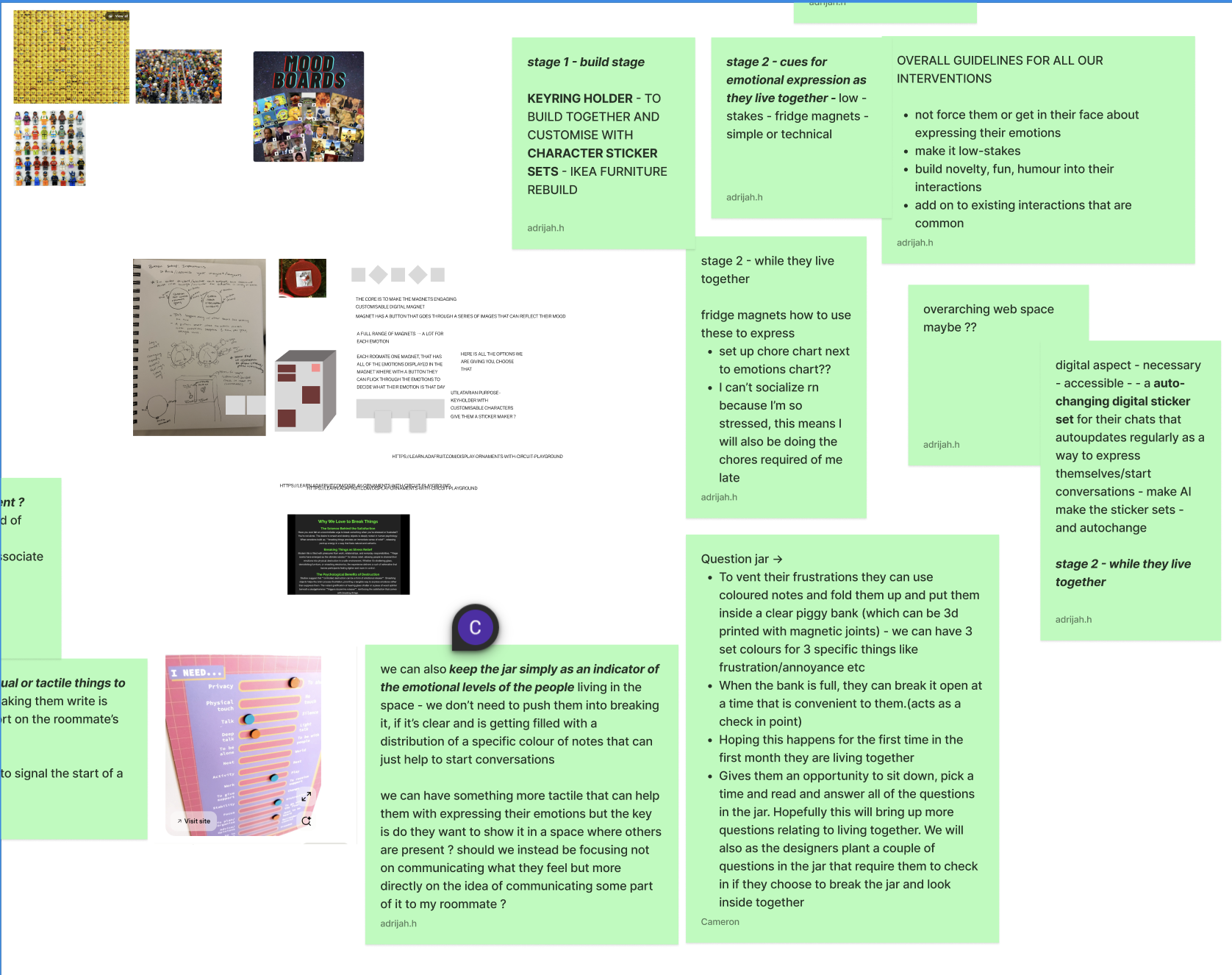
Through critique and iteration, we refined concepts into three core toolkit components.
EARLY ITERATION
We explored activity concepts across different lifecycle moments.
KEY SOLUTION COMPONENT: FIRST MOVES
An interactive fortune-teller game that supports early goal- and expectation-setting.
RESEARCH FOUNDATION
Addresses initiation gaps and relationship investment through a playful, structured entry point for awkward conversations.
HOW IT WORKS
- Play at move-in to establish initial goals and communication preferences
- Replay when things change to reestablish shared understanding
SUPPORTS
Goal-setting intervention point


KEY SOLUTION COMPONENT: FIND THE BEAT
A set of magnets that cue emotions, understanding, and capacity to talk.
RESEARCH FOUNDATION
Addresses when to initiate conversations and supports diverse communication styles. Students often wanted to talk but weren’t sure if their roommate was receptive.
HOW IT WORKS
- Each roommate has magnets showing 6 emotions and 3 conversation capacities
- Used daily on visible surfaces to passively communicate mood and openness
- Reduces effort to check in and fosters ongoing emotional awareness
DESIGN RATIONALE
Passive magnet signals enable continuous, low-effort communication without adding verbal pressure. Magnets were chosen for their constant visibility, dorm integration, and unavoidable presence.
SUPPORTS
Daily relationship maintenance and understanding, informs timing for action negotiation





KEY SOLUTION COMPONENT: REACH OUT
A magnet with a QR code linking to a web app that helps start difficult conversations.
RESEARCH FOUNDATION
Addresses students’ uncertainty about how to approach conflicts by providing structured conversation frameworks.
HOW IT WORKS
The magnet signals when someone wants to talk, and the QR code in the shared space links to a web app where users can send conversation cards to their roommate.
DESIGN RATIONALE
Pre-written frameworks ease hesitation and improve communication. The magnet and QR code provide a visible, easy entry point.
SUPPORTS
Action negotiation intervention point





Login

Welcome to Convo Cards!
Start tricky conversations with ease. Send simple text cards that help you bring up the things that need talking about.
Try it out
Learn other ways to start the convo
1
9:41
TwoToTango.com
From
Cam
I just wanted to let you know that I start feeling a bit anxious when the dishes pile up in the sink. Would you be up for a quick chat sometime soon so we can figure out a way to handle it together? Thanks!
Login

Send one back
Learn other ways to start the convo
1
9:41
TwoToTango.com
HOW THEY WORK TOGETHER
The three components form an ecosystem across the roommate lifecycle, each building on the others.
This lifecycle approach emerged from conflict mapping research, which showed that conflicts often stemmed from changed circumstances (new partner, increased academic stress, different sleep schedule) without renegotiated expectations.
Move In: Use First Moves fortune teller to set shared goals and build initial investment.
Daily: Use Find the Beat magnets for ongoing emotional awareness and passive communication.
As Needed: Use Find the Beat to gauge readiness, then Reach Out app to guide tough conversations.
When Things Change: Replay First Moves to update understanding and renegotiate expectations.
WHAT MAKES TWO TO TANGO UNIQUE
Research-Based: All components are grounded in validated research, not assumptions.
Lifecycle Support: TwoToTango guides roommates through goal-setting, daily maintenance, and conflict.
Physical Toolkit: Tangible objects in living spaces offer low-barrier communication, avoiding the stigma of conflict apps.
Relationship First: Builds rapport and shared goals early to ease difficult conversations later.
Multi-Modal: Supports different communication styles with verbal, non-verbal, and digital tools.
Non-Confrontational: Designed to feel natural and playful, reducing the emotional barrier to starting tough talks.
BACK TO WORK
BACK TO WORK
TWO TO TANGO
Pittsburgh, PA
Designed a toolkit to help undergraduate roommates navigate conflict and build healthy communication patterns
Role: UX Designer
My Contributions: Led entire research phase, directed research synthesis, led ideation phase, designed and developed web application.
Team: Two designers (Cameron Fahsholtz, Adrija Haldar)
Duration: November 2025 to December 2025


PROBLEM
University students know communication is key to resolving roommate conflicts, but they struggle with how to actually do it. When strangers move into shared housing, they bring unspoken expectations shaped by different backgrounds. These differences only become visible through cohabitation, creating inevitable friction.
Students face a critical gap: they know what they should communicate during conflicts, but have difficulty initiating conversations and don't know how to have them without making things worse. As a result, issues escalate, living environments become uncomfortable, and relationships deteriorate.
GOAL
Help roommates initiate and navigate difficult conversations about conflict.
OUTCOME
We designed TwoToTango, a three-part physical toolkit that lowers barriers to difficult conversations. The toolkit works throughout the roommate lifecycle, from move-in to daily living to conflict moments, providing structured, low-stakes ways to establish communication methods, build relationships, and address issues before they escalate.
RESEARCH METHODS
Led entire research phase (initial interviews, conflict mapping study, expert interviews), directed research synthesis and insight generation
INITIAL INTERVIEWS
Led 8 semi-structured interviews with CMU students about their last roommate conflict. Developed protocol focusing on retrospective conflict analysis and decision points where communication could have changed outcomes.
EXPERT INTERVIEWS
Interviewed 4 experts in conflict resolution, communication theory, and roommate dynamics to understand why students struggle with these conversations.
CONFLICT MAPPING STUDY
Designed and led conflict mapping exercises with 10 CMU students, creating a visual research method where participants mapped their last conflict on a timeline, highlighting key issue points, what they could've done differently, what they should've said, and why they didn't.
KEY INSIGHTS TRANSLATED TO DESIGN REQUIREMENTS
THE COMMUNICATION PARADOX
Every student could articulate what they should have communicated—the problem was execution, not knowledge.
Design Requirement: Encourage roommates to communicate effectively by lowering barriers to action.
THE INITIATION &
METHOD GAP
Students struggled to initiate conversations without creating confrontation. Average time between noticing an issue and addressing it: 2-3 weeks.
Design Requirement: Support roommates through low-stakes, structured entry points that reduce emotional cost.
ONE-SIZE-FITS-ALL WON’T WORK
Students have different conflict styles across the Adaptation vs. Confrontation Spectrum.
Design Requirement: Provide multiple interaction points for different communication preferences.
INVESTMENT DRIVES RESOLUTION
Roommate pairs with early shared goals and relationship foundations navigated conflict more successfully.
Design Requirement: Help roommates build their interpersonal relationships through shared activities at move-in.
IDENTIFYING INTERVENTION POINTS
I adapted two cybernetics models by Paul Pangaro, identifying research-backed intervention points. My paper, Using Cybernetic Methods to Guide Designer Interventions in Roommate Communication for Conflict Navigation, is available here.
MODEL ONE: A MODEL OF CONVERSATION
MODEL TWO: CONVERSATION TO COLLABORATE
DESIGN PROCESS
I collaborated with a teammate, focusing on UX while they led visual design.
USER ARCHETYPE CREATION
We created the "Learning Roommate" archetype based on research patterns.

Archetype
Learning Roommate
Background
A college student living away from home for the first time, learning how to communicate and share space.
Needs
They need a comfortable living environment where they feel at ease.
Behaviors
They are willing to build a roommate relationship and work with their roommate to navigate conflict.
HI-FI PROTOTYPE
We developed functional prototypes across both physical and digital formats.
DESIGN REFINEMENT
Through critique and iteration, we refined concepts into three core toolkit components.
EARLY ITERATION
We explored activity concepts across different lifecycle moments.
KEY SOLUTION COMPONENT: FIRST MOVES
An interactive fortune-teller game that supports early goal- and expectation-setting.
RESEARCH FOUNDATION
Addresses initiation gaps and relationship investment through a playful, structured entry point for awkward conversations.
HOW IT WORKS
- Play at move-in to establish initial goals and communication preferences
- Replay when things change to reestablish shared understanding
SUPPORTS
Goal-setting intervention point
KEY SOLUTION COMPONENT: FIND THE BEAT
A set of magnets that cue emotions, understanding, and capacity to talk.
RESEARCH FOUNDATION
Addresses when to initiate conversations and supports diverse communication styles. Students often wanted to talk but weren’t sure if their roommate was receptive.
HOW IT WORKS
- Each roommate has magnets showing 6 emotions and 3 conversation capacities
- Used daily on visible surfaces to passively communicate mood and openness
- Reduces effort to check in and fosters ongoing emotional awareness
DESIGN RATIONALE
Passive magnet signals enable continuous, low-effort communication without adding verbal pressure. Magnets were chosen for their constant visibility, dorm integration, and unavoidable presence.
SUPPORTS
Daily relationship maintenance and understanding, informs timing for action negotiation
KEY SOLUTION COMPONENT: REACH OUT
A magnet with a QR code linking to a web app that helps start difficult conversations.
RESEARCH FOUNDATION
Addresses students’ uncertainty about how to approach conflicts by providing structured conversation frameworks.
HOW IT WORKS
The magnet signals when someone wants to talk, and the QR code in the shared space links to a web app where users can send conversation cards to their roommate.
DESIGN RATIONALE
Pre-written frameworks ease hesitation and improve communication. The magnet and QR code provide a visible, easy entry point.
SUPPORTS
Action negotiation intervention point

Login


Welcome to Convo Cards!
Start tricky conversations with ease. Send simple text cards that help you bring up the things that need talking about.
Try it out
Learn other ways to start the convo
1


9:41

TwoToTango.com

From
Cam
I just wanted to let you know that I start feeling a bit anxious when the dishes pile up in the sink. Would you be up for a quick chat sometime soon so we can figure out a way to handle it together? Thanks!
Login

Send one back
Learn other ways to start the convo
1
9:41

TwoToTango.com

HOW THEY WORK TOGETHER
The three components form an ecosystem across the roommate lifecycle, each building on the others.
This lifecycle approach emerged from conflict mapping research, which showed that conflicts often stemmed from changed circumstances (new partner, increased academic stress, different sleep schedule) without renegotiated expectations.
Move In: Use First Moves fortune teller to set shared goals and build initial investment.
Daily: Use Find the Beat magnets for ongoing emotional awareness and passive communication.
As Needed: Use Find the Beat to gauge readiness, then Reach Out app to guide tough conversations.
When Things Change: Replay First Moves to update understanding and renegotiate expectations.
WHAT MAKES TWO TO TANGO UNIQUE
Research-Based: All components are grounded in validated research, not assumptions.
Lifecycle Support: TwoToTango guides roommates through goal-setting, daily maintenance, and conflict.
Physical Toolkit: Tangible objects in living spaces offer low-barrier communication, avoiding the stigma of conflict apps.
Relationship First: Builds rapport and shared goals early to ease difficult conversations later.
Multi-Modal: Supports different communication styles with verbal, non-verbal, and digital tools.
Non-Confrontational: Designed to feel natural and playful, reducing the emotional barrier to starting tough talks.
BACK TO WORK