/ Carnegie Mellon University Student Housing

Roommate Conflict Communication Toolkit
Designed a multi-modal toolkit that helps roommates navigate conflict through structured communication tools and conversation frameworks.

Why Include This
Complex social system

Institution
Carnegie Mellon University

Role & Contributions
Design Research, Prototyping,Multimodal Interaction Design

Team
2 Designers

Year
2025


Challenge
Roommates struggle to initiate or navigate conflict conversations without escalation. Shared housing reveals unspoken expectations shaped by different backgrounds, creating friction that surfaces only through cohabitation.
Outcome

Supports full co-living lifecycle.
Accommodates verbal, non-verbal, and digital communication styles.
Physical items enable easy communication in shared spaces.
Builds early trust and shared goals to ease tough talks.

Research Process: Understanding Roommates
I led entire research phase (initial interviews, conflict mapping study, expert interviews), directed research synthesis and insight generation
Initial Interviews
Led 8 semi-structured interviews with CMU students about their last roommate conflict. Developed protocol focusing on retrospective conflict analysis and decision points where communication could have changed outcomes.
Conflict Mapping Study
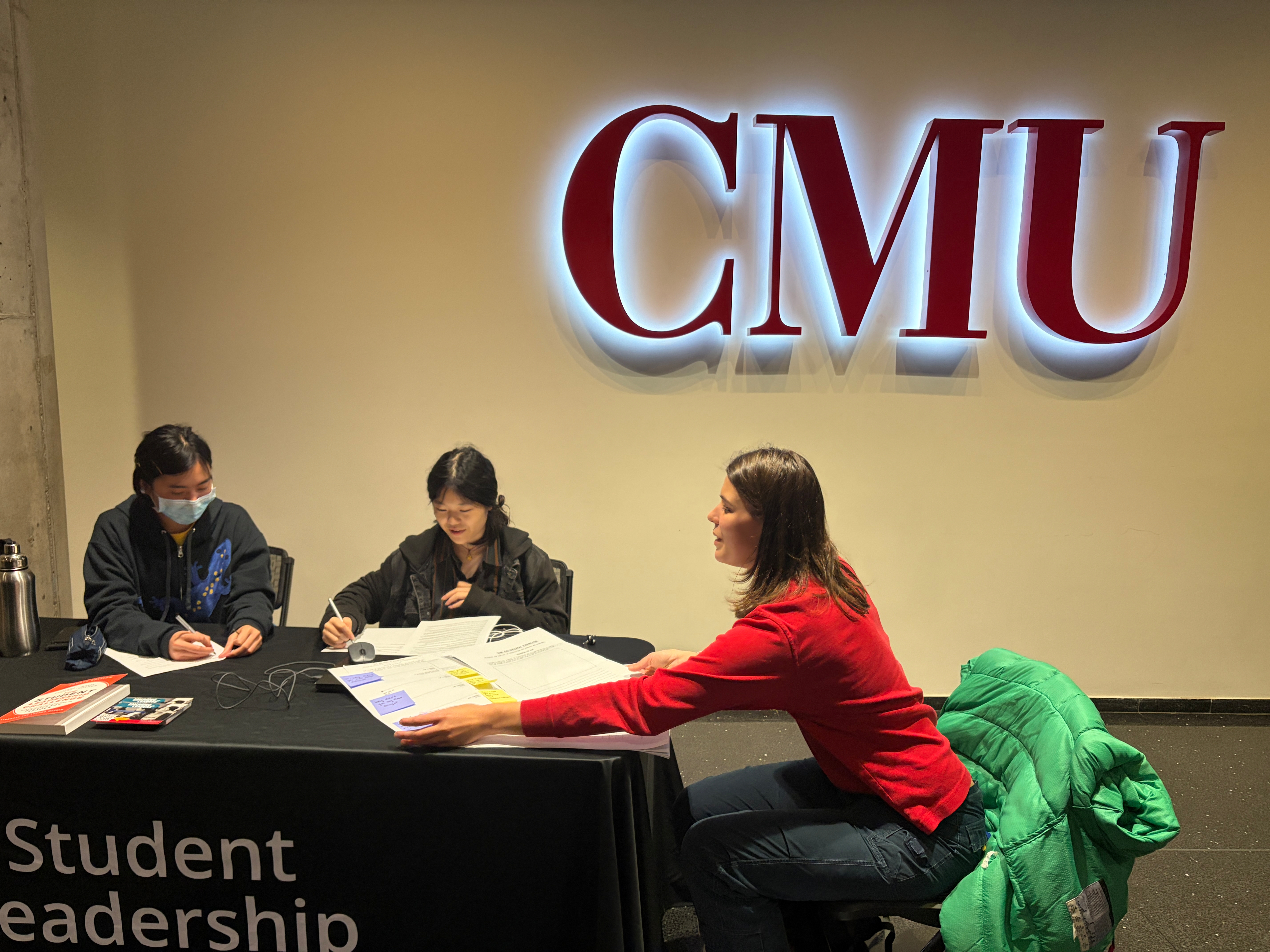
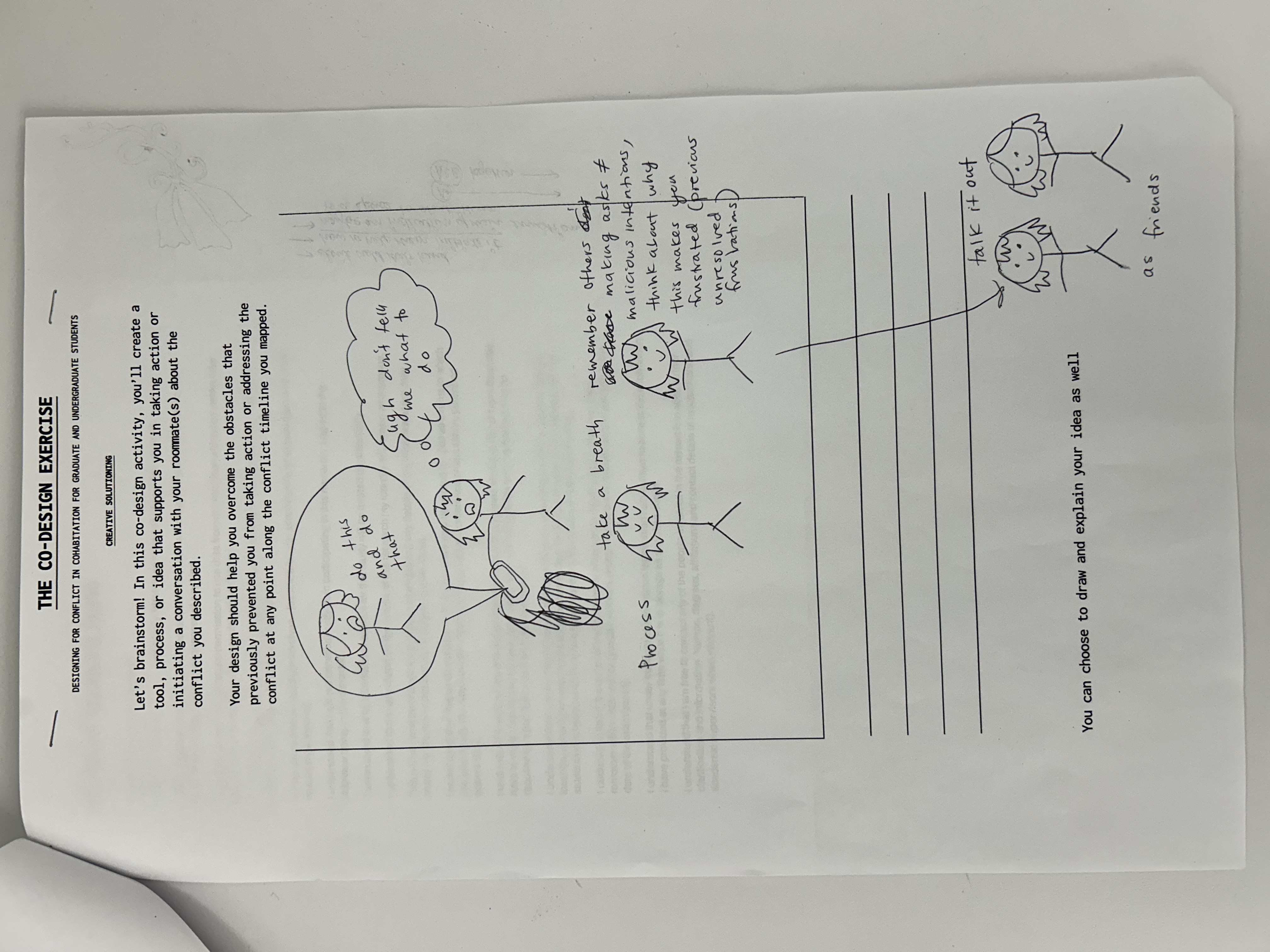
Designed and led conflict mapping exercises with 10 CMU students, creating a visual research method where participants mapped their last conflict on a timeline, highlighting key issue points, what they could've done differently, what they should've said, and why they didn't.
Expert Interviews
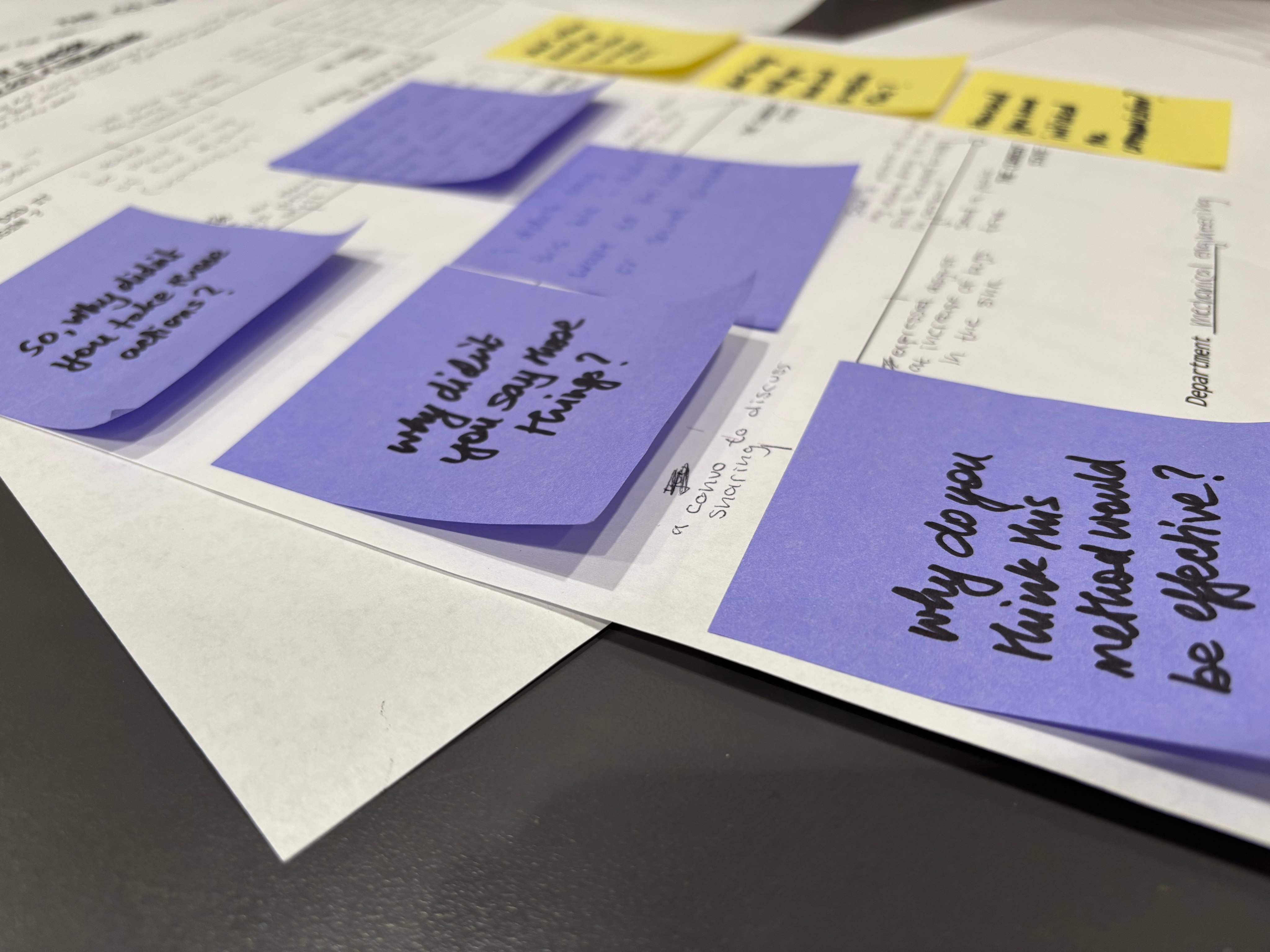
Interviewed 4 experts in conflict resolution, communication theory, and roommate dynamics to understand why students struggle with these conversations.

Key Insights Translated to Design Requirements
Communication Paradox
Design Requirement: Lower barriers to effective communication.
Initiation Gap
Design Requirement: Provide low-stakes, structured entry points to ease emotional barriers.
No One-Size Solution
Design Requirement: Offer multiple interaction options to suit different preferences.
Investment Drives Resolution
Design Requirement: Foster relationship-building through shared activities at move-in.
Identifying Intervention Points
I adapted two cybernetics models by Paul Pangaro, identifying research-backed intervention points. My paper, Using Cybernetic Methods to Guide Designer Interventions in Roommate Communication for Conflict Navigation, is available here.
Model One: A Model of Conversation


ROOMMATE 2

ROOMMATE 1
Evaluating
Evaluating
Action
Action


Goal
Goal
Agreement
Language
Co-Living
Enviornment
Model Two: Conversation to Collaborate

ROOMMATE 2

ROOMMATE 1


Conversation to agree on a roommate goal.

ROOMMATE 2

ROOMMATE 1
Conversation to agree on action around that goal.


Agreement leads to ...
Agreement leads to acting in the world
Complete the action
Continue to complete the action
at agreed upon frequency
Was the action
completed?
Did the action
achieve the goal?
May lead to a new...
?
?


Yes


Yes
No
No


Design Process
We built and tested multiple low-fidelity prototypes through an iterative process.
User Archetype Creation
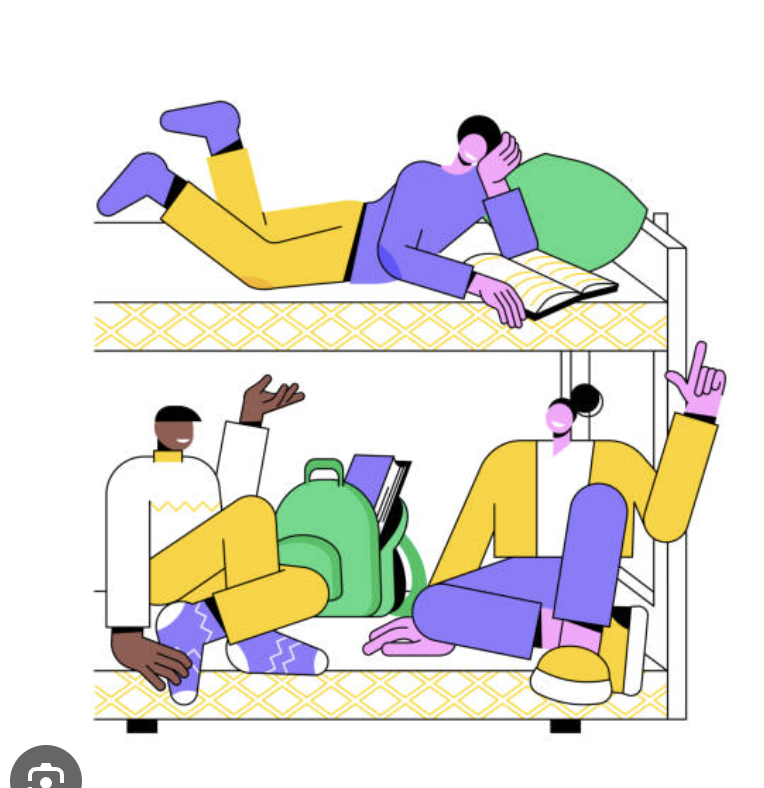
We created the "Learning Roommate" archetype based on research patterns.

Archetype
Learning Roommate
Background
A college student living away from home for the first time, learning how to communicate and share space.
Needs
They need a comfortable living environment where they feel at ease.
Behaviors
They are willing to build a roommate relationship and work with their roommate to navigate conflict.
Hi-Fi Prototype
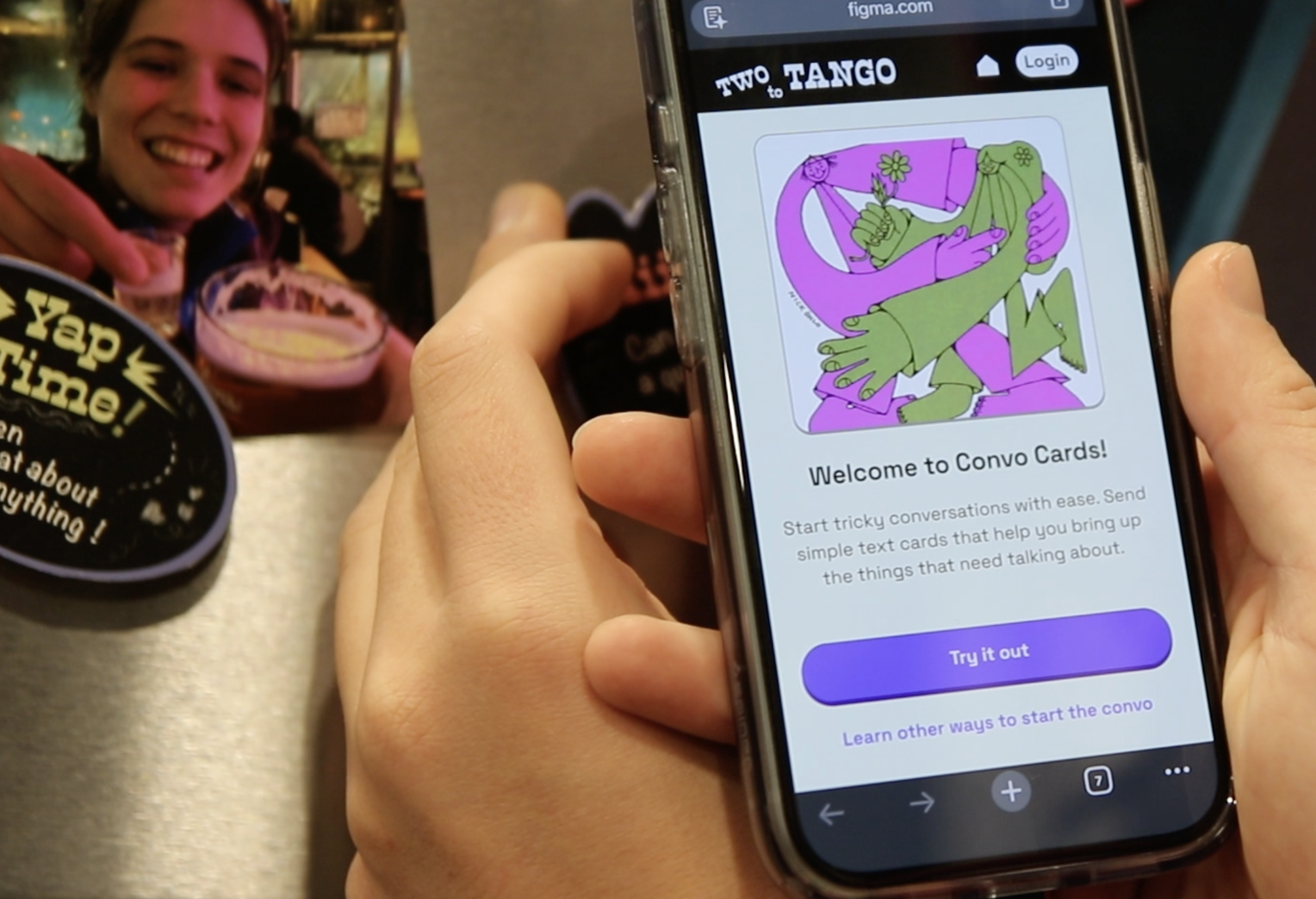
We developed functional prototypes across both physical and digital formats.
Design Refinement
Through critique and iteration, we refined concepts into three core toolkit components.
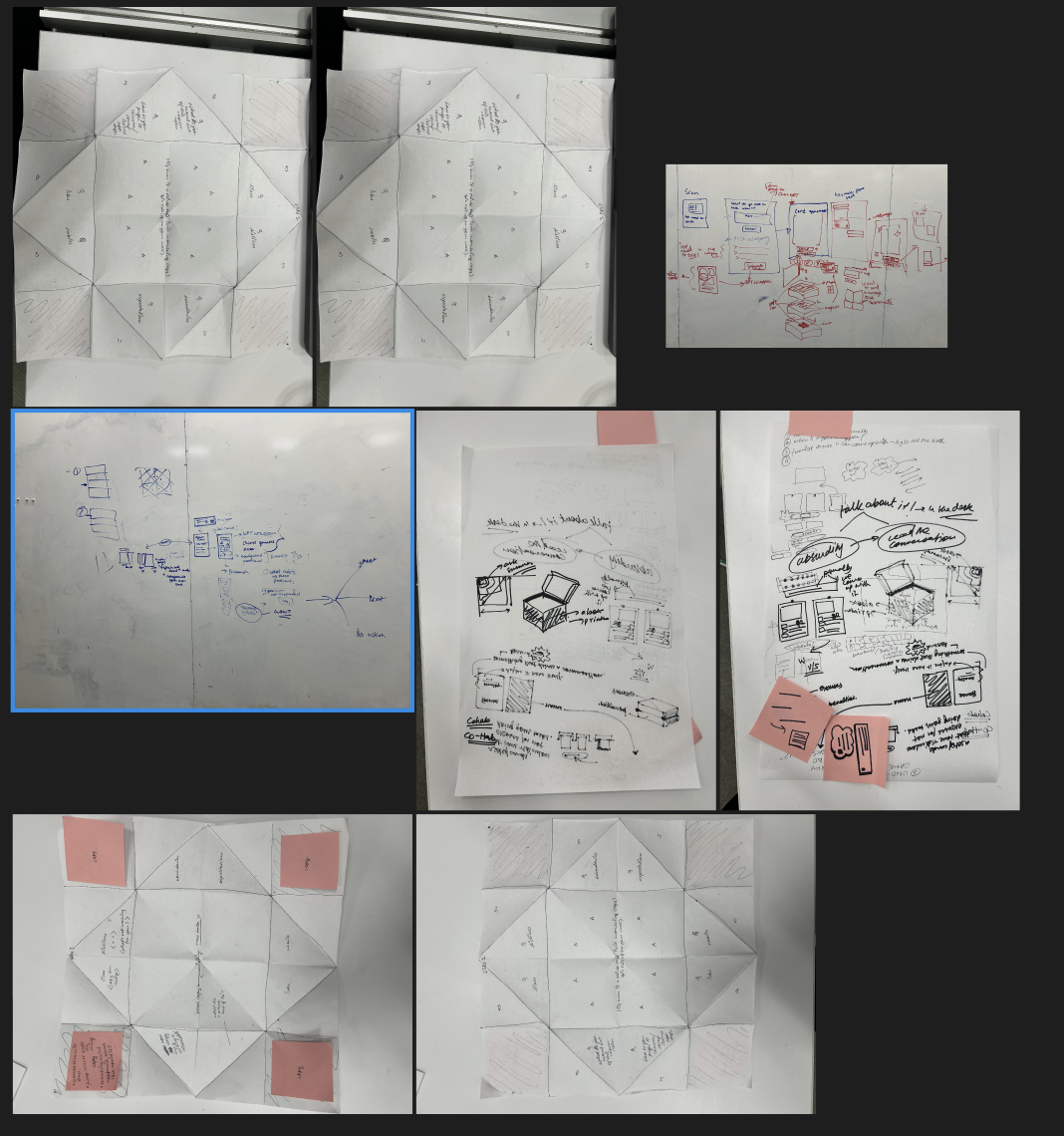
Early Iteration
We explored activity concepts across different lifecycle moments.
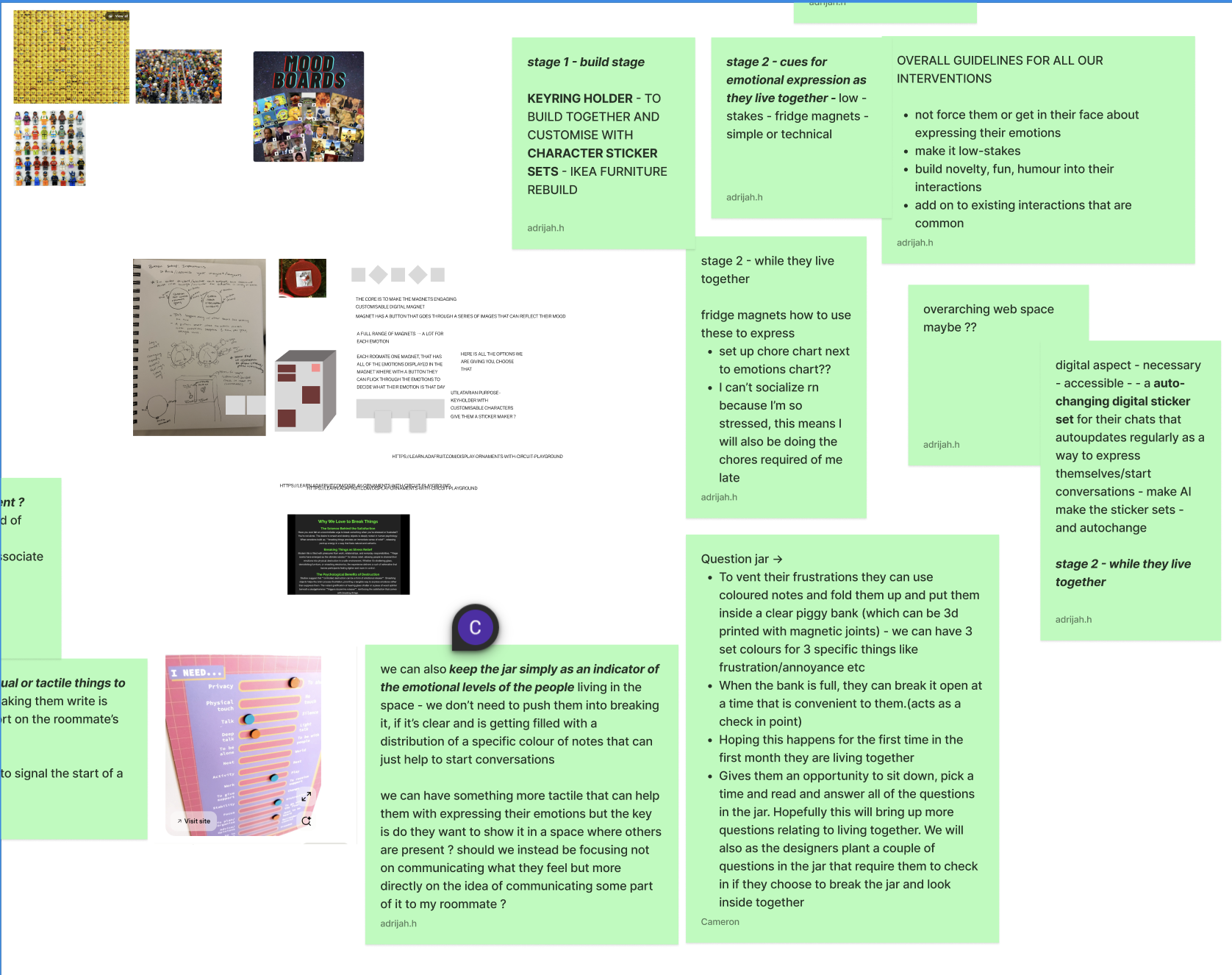
Solution: The Toolkit
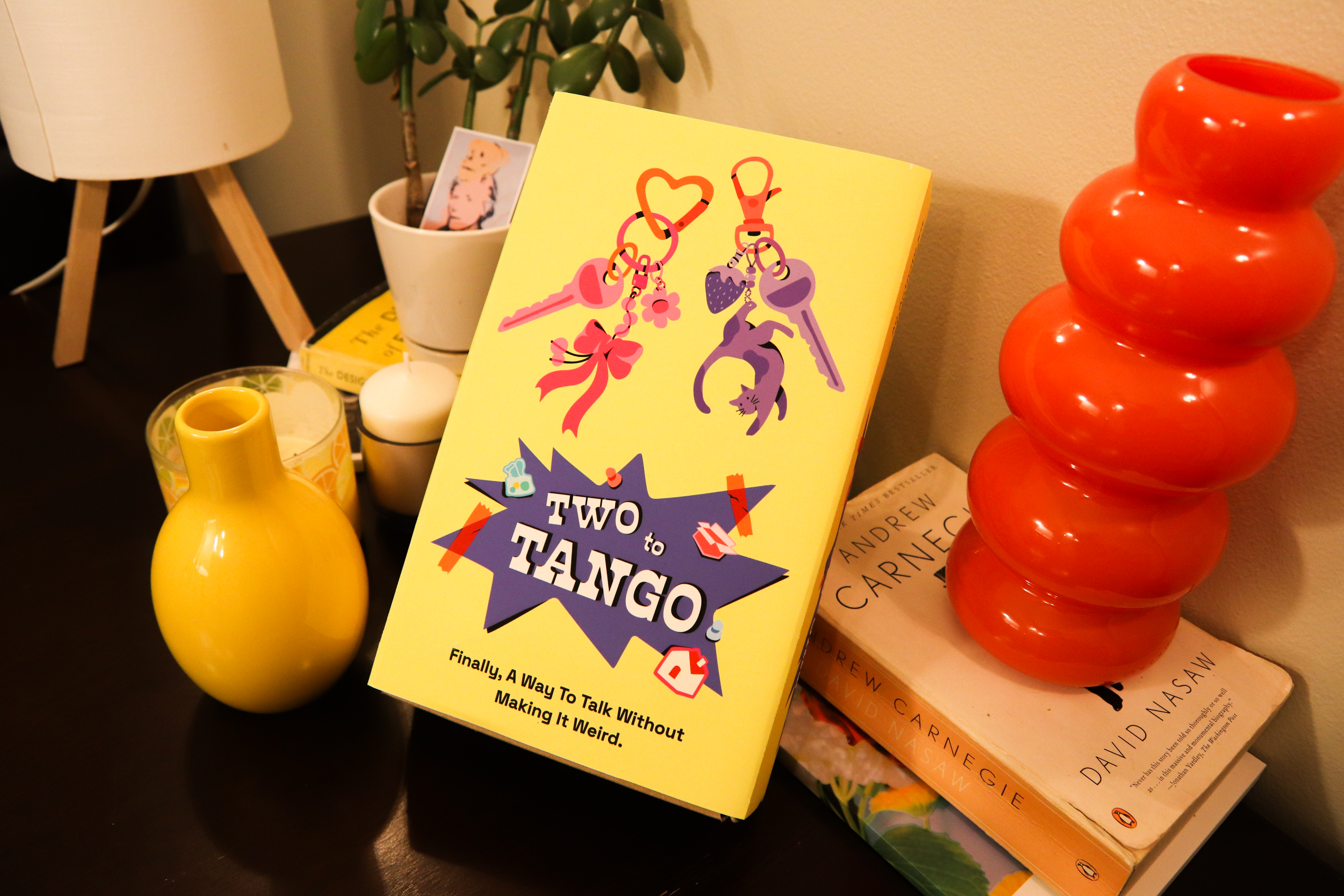
This toolkit helps you understand each other, address issues early, and create a living situation that works for both.
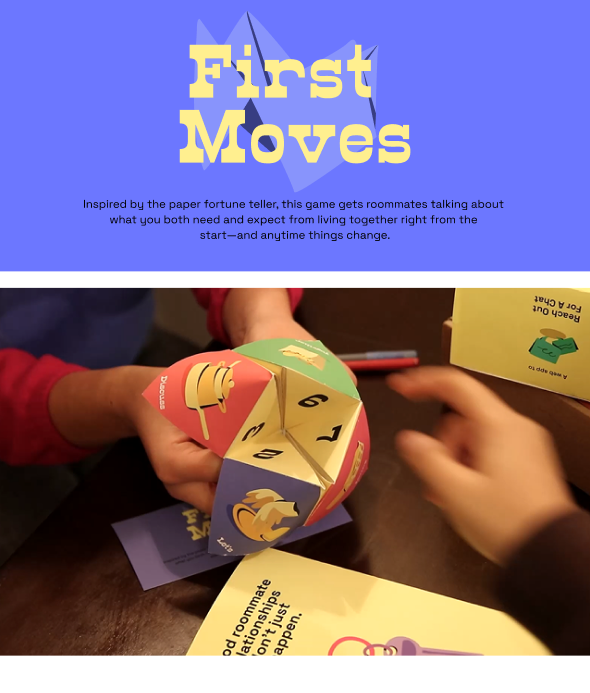
First Move
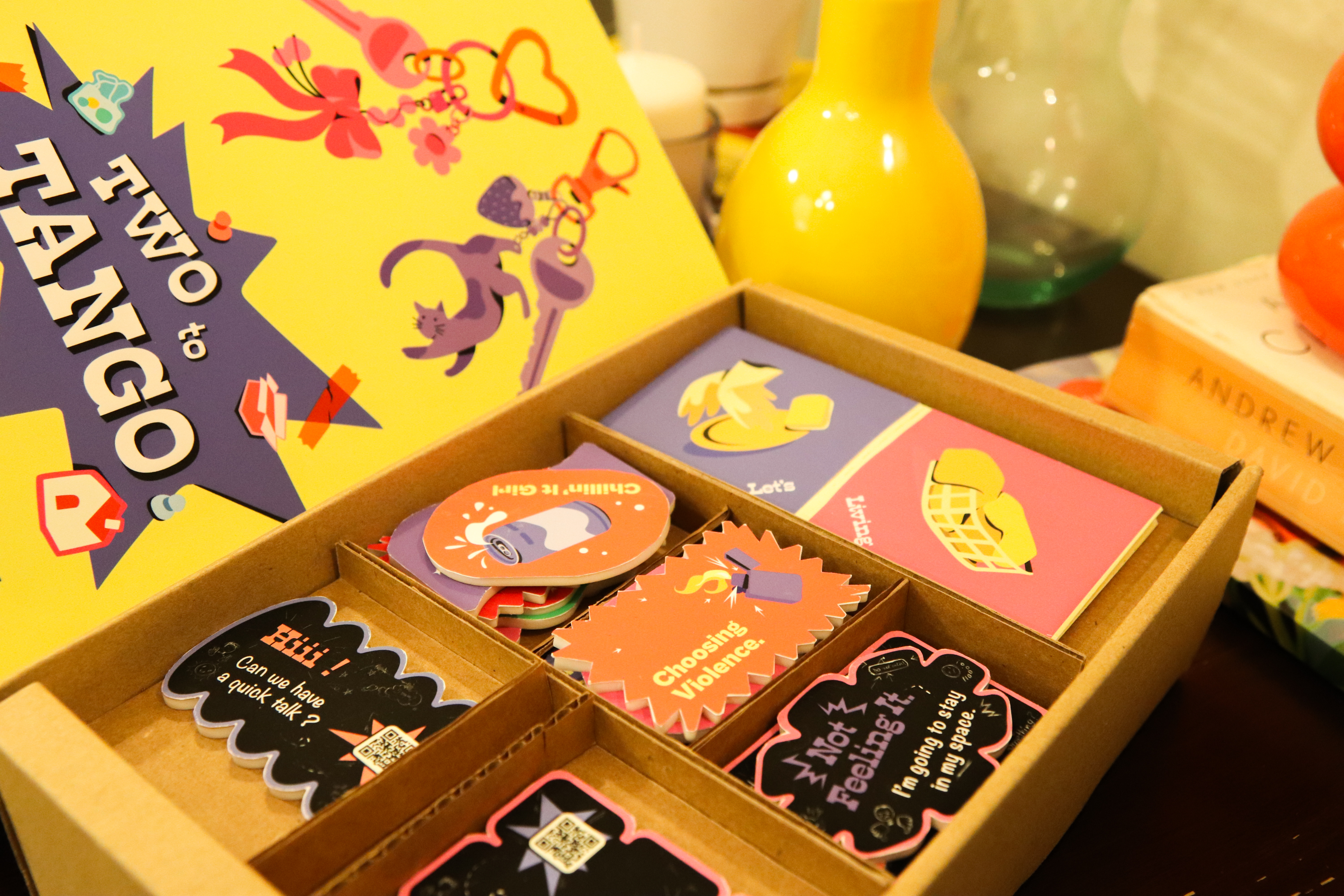
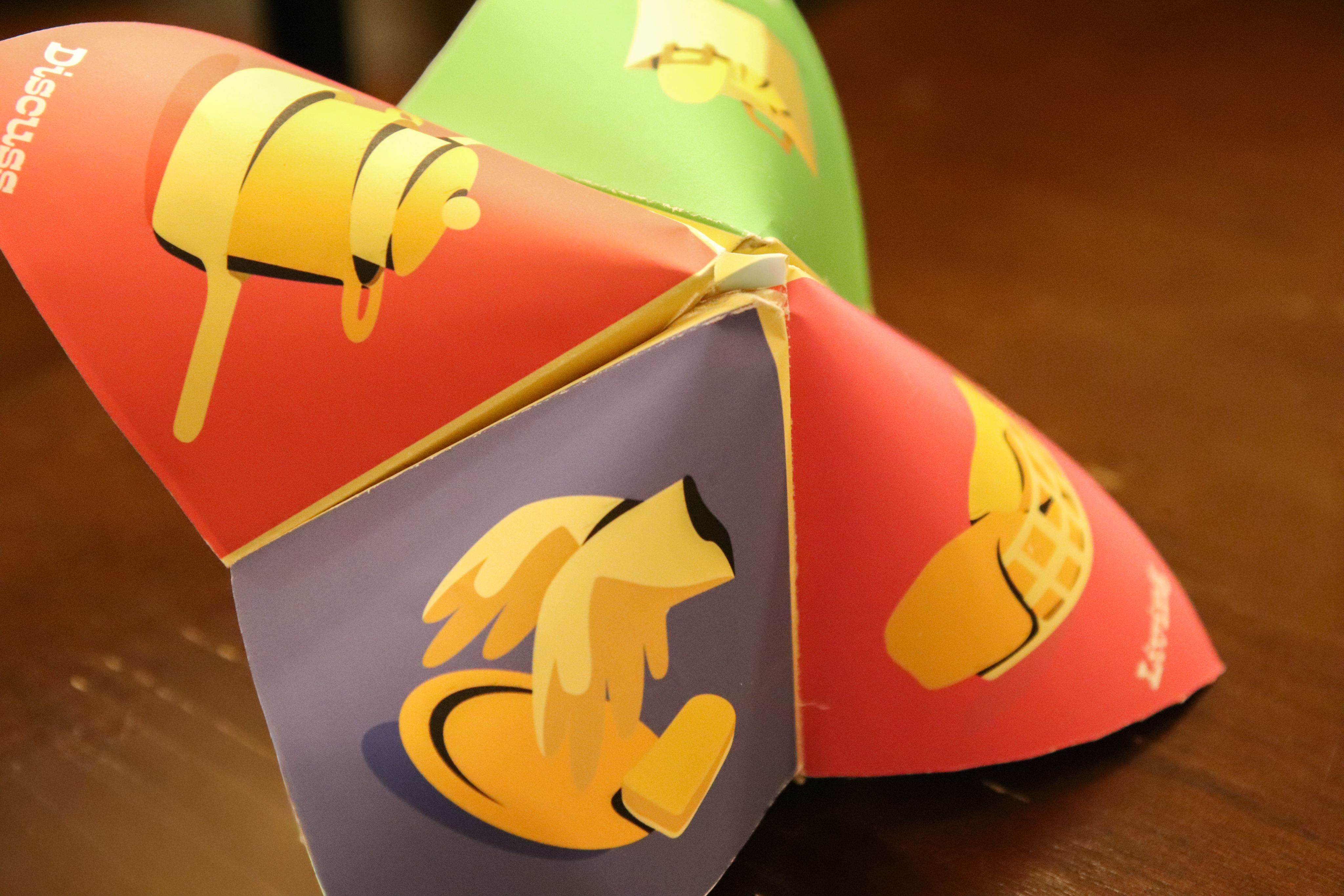
How It Works: An interactive fortune-teller game played at move in and replayed as needed to help roommates set and update goals and communication preferences.
Design Justification: Addresses initiation gaps and fosters relationship investment with a playful, structured way to start awkward conversations.
Supports: Goal setting
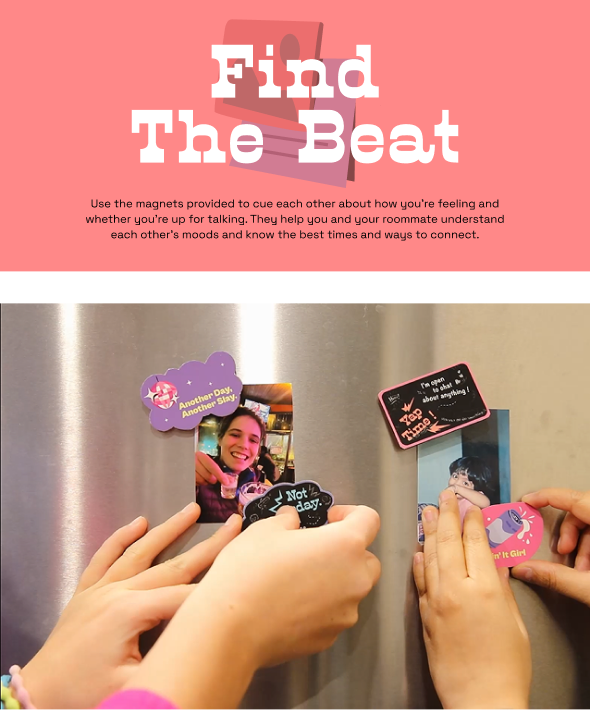
Find The Beat
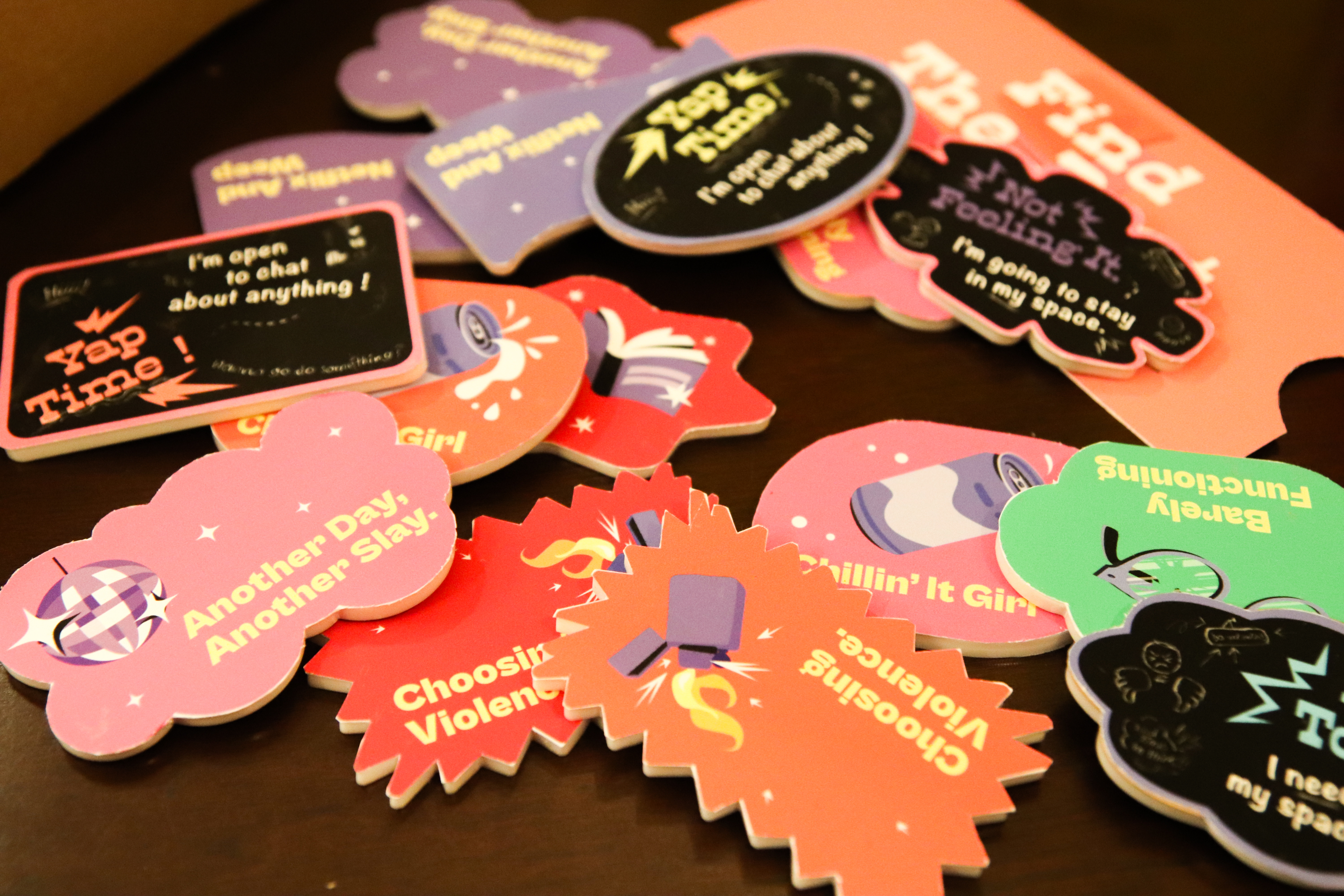
How It Works: Each day, roommates place magnets showing their emotions and readiness to talk on their photo on the fridge to signal their current state to each other.
Design Justification: Supports roommates in timing conversations and navigating communication styles through passive, visible signals that enable easy, ongoing communication without verbal pressure.
Supports: Daily relationship maintenance and guides timing for action and negotiation.
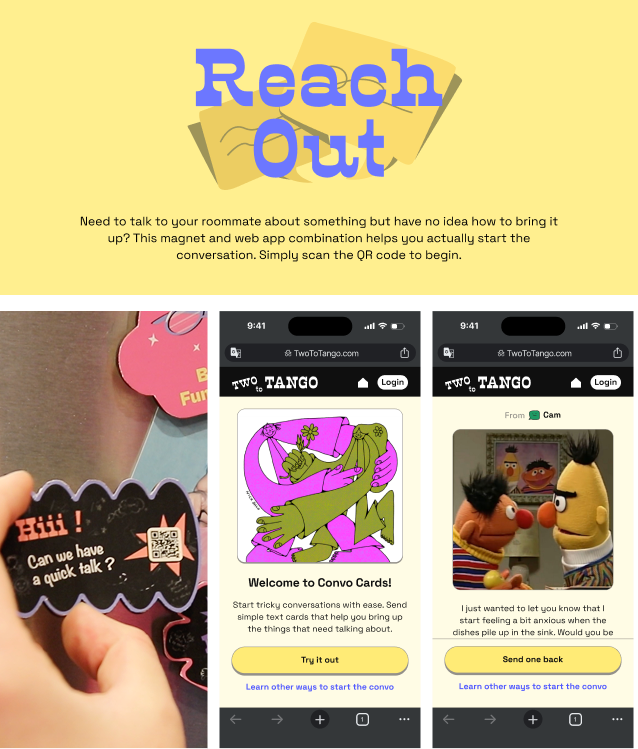
Reach Out
How It Works: A roommate signals they want to talk by placing the “We need to talk” magnet on their roommate’s photo. The magnet’s QR code links to a web app where they can send a text card to start the conversation.
Design Justification: This reduces hesitation to start difficult conversations. Magnets and QR codes provide an easy, visible way for one roommate to signal they want to talk.
Supports: Initiating hard conversations.
How They Work Together
The three parts work together across the roommate lifecycle. This approach emerged from research showing conflicts stem from changed circumstances without renegotiated expectations.
Move-In: Use the First Moves fortune teller to set goals and build investment.
Daily: Use Find the Beat magnets for awareness and passive communication.
As Needed: Gauge readiness with magnets, then use Reach Out to guide tough talks.
When Things Change: Replay First Moves to renegotiate expectations.

Reflection
Designing for roommate conflict turned out to be far more complex than I expected. User research and system mapping were essential in guiding my design process to navigate this complexity effectively.
back to case studies
/ Carnegie Mellon University Student Housing

Roommate Conflict Communication Toolkit
Designed a multi-modal toolkit that helps roommates navigate conflict through structured communication tools and conversation frameworks.
Why Include This
Complex social system
Institution
Carnegie Mellon University
Role & Contributions
Design Research, Prototyping,Multimodal Interaction Design
Team
2 Designers
Year
2025


Challenge
Roommates struggle to initiate or navigate conflict conversations without escalation. Shared housing reveals unspoken expectations shaped by different backgrounds, creating friction that surfaces only through cohabitation.
Outcome
Supports full co-living lifecycle.
Accommodates verbal, non-verbal, and digital communication styles.
Physical items enable easy communication in shared spaces.
Builds early trust and shared goals to ease tough talks.

Research Process: Understanding Roommates
I led entire research phase (initial interviews, conflict mapping study, expert interviews), directed research synthesis and insight generation
Initial Interviews
Led 8 semi-structured interviews with CMU students about their last roommate conflict. Developed protocol focusing on retrospective conflict analysis and decision points where communication could have changed outcomes.
Conflict Mapping Study
Designed and led conflict mapping exercises with 10 CMU students, creating a visual research method where participants mapped their last conflict on a timeline, highlighting key issue points, what they could've done differently, what they should've said, and why they didn't.
Expert Interviews
Interviewed 4 experts in conflict resolution, communication theory, and roommate dynamics to understand why students struggle with these conversations.

Key Insights Translated to Design Requirements
Communication Paradox
Design Requirement: Lower barriers to effective communication.
Initiation Gap
Design Requirement: Provide low-stakes, structured entry points to ease emotional barriers.
No One-Size Solution
Design Requirement: Offer multiple interaction options to suit different preferences.
Investment Drives Resolution
Design Requirement: Foster relationship-building through shared activities at move-in.
Identifying Intervention Points
I adapted two cybernetics models by Paul Pangaro, identifying research-backed intervention points. My paper, Using Cybernetic Methods to Guide Designer Interventions in Roommate Communication for Conflict Navigation, is available here.
Model One: A Model of Conversation


ROOMMATE 2

ROOMMATE 1
Evaluating
Evaluating
Action
Action


Goal
Goal
Agreement
Language
Co-Living
Enviornment
Model Two: Conversation to Collaborate

ROOMMATE 2

ROOMMATE 1


Conversation to agree on a roommate goal.

ROOMMATE 2

ROOMMATE 1
Conversation to agree on action around that goal.


Agreement leads to ...
Agreement leads to acting in the world
Complete the action
Continue to complete the action
at agreed upon frequency
Was the action
completed?
Did the action
achieve the goal?
May lead to a new...
?
?


Yes


Yes
No
No


Design Process
We built and tested multiple low-fidelity prototypes through an iterative process.
User Archetype Creation
We created the "Learning Roommate" archetype based on research patterns.
Archetype
Learning Roommate
Background
A college student living away from home for the first time, learning how to communicate and share space.
Needs
They need a comfortable living environment where they feel at ease.
Behaviors
They are willing to build a roommate relationship and work with their roommate to navigate conflict.
Hi-Fi Prototype
We developed functional prototypes across both physical and digital formats.
Design Refinement
Through critique and iteration, we refined concepts into three core toolkit components.
Early Iteration
We explored activity concepts across different lifecycle moments.
Solution: The Toolkit
This toolkit helps you understand each other, address issues early, and create a living situation that works for both.
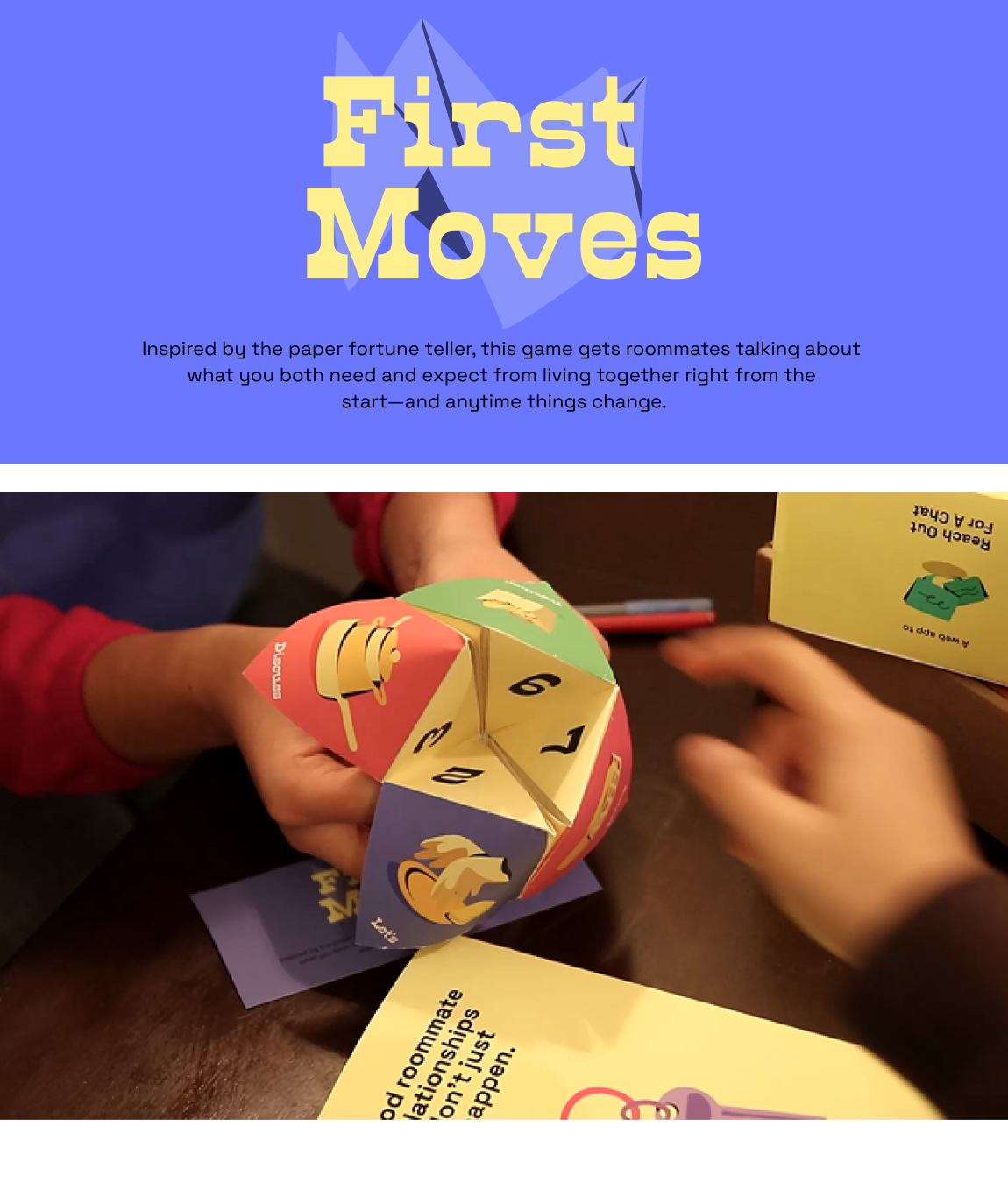
First Move
How It Works: An interactive fortune-teller game played at move in and replayed as needed to help roommates set and update goals and communication preferences.
Design Justification: Addresses initiation gaps and fosters relationship investment with a playful, structured way to start awkward conversations.
Supports: Goal setting
Find The Beat
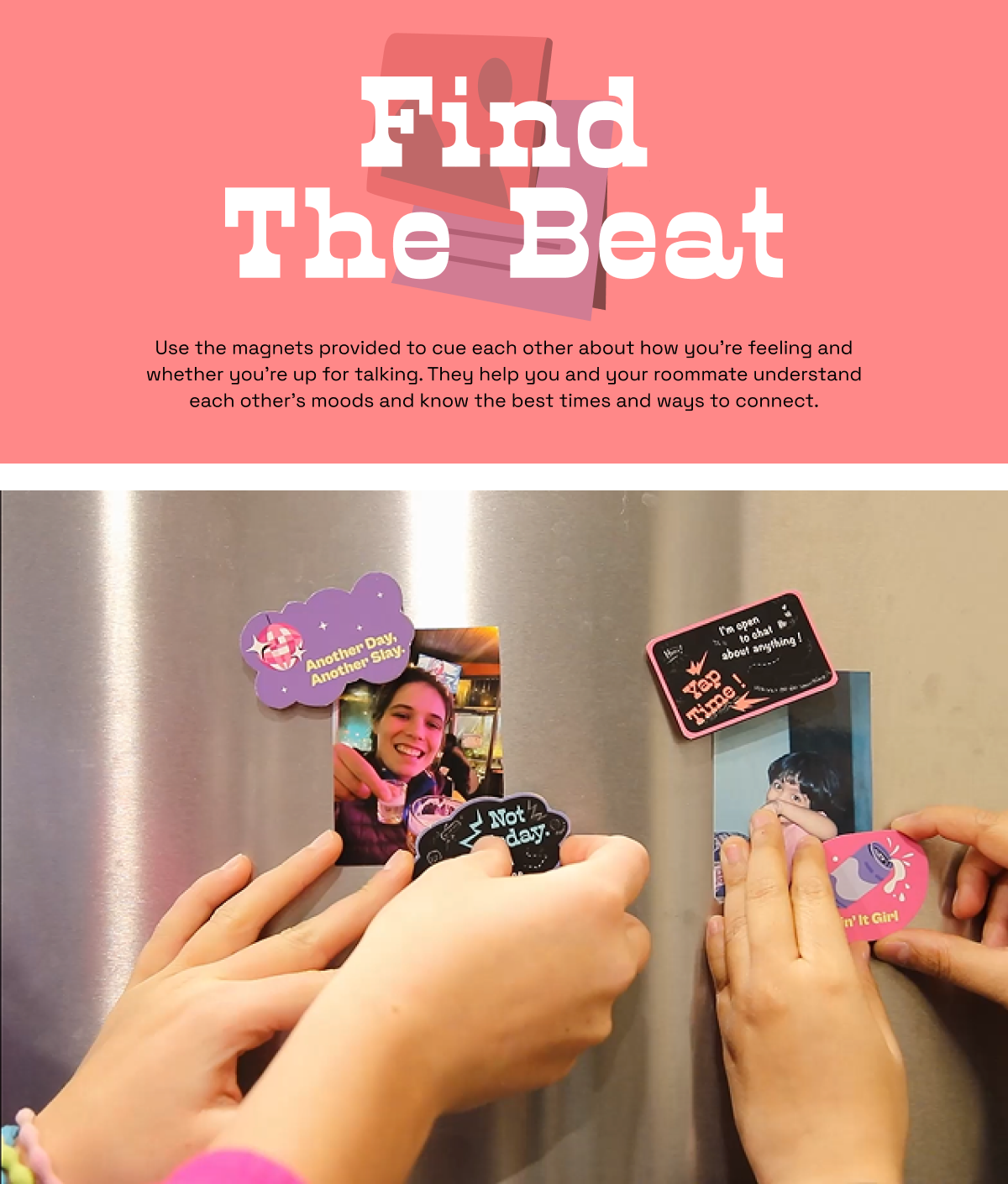
How It Works: Each day, roommates place magnets showing their emotions and readiness to talk on their photo on the fridge to signal their current state to each other.
Design Justification: Supports roommates in timing conversations and navigating communication styles through passive, visible signals that enable easy, ongoing communication without verbal pressure.
Supports: Daily relationship maintenance and guides timing for action and negotiation.
Reach Out
How It Works: A roommate signals they want to talk by placing the “We need to talk” magnet on their roommate’s photo. The magnet’s QR code links to a web app where they can send a text card to start the conversation.
Design Justification: This reduces hesitation to start difficult conversations. Magnets and QR codes provide an easy, visible way for one roommate to signal they want to talk.
Supports: Initiating hard conversations.
How They Work Together
The three parts work together across the roommate lifecycle. This approach emerged from research showing conflicts stem from changed circumstances without renegotiated expectations.
Move-In: Use the First Moves fortune teller to set goals and build investment.
Daily: Use Find the Beat magnets for awareness and passive communication.
As Needed: Gauge readiness with magnets, then use Reach Out to guide tough talks.
When Things Change: Replay First Moves to renegotiate expectations.

Reflection
Designing for roommate conflict turned out to be far more complex than I expected. User research and system mapping were essential in guiding my design process to navigate this complexity effectively.
back to case studies
/ Carnegie Mellon University Student Housing

Roommate Conflict Communication Toolkit
Designed a multi-modal toolkit that helps roommates navigate conflict through structured communication tools and conversation frameworks.
Why Include This
Complex social system
Institution
Carnegie Mellon University
Role & Contributions
Design Research, Prototyping,Multimodal Interaction Design
Team
2 Designers
Year
2025


Challenge
Roommates struggle to initiate or navigate conflict conversations without escalation. Shared housing reveals unspoken expectations shaped by different backgrounds, creating friction that surfaces only through cohabitation.
Outcome
Supports full co-living lifecycle.
Accommodates verbal, non-verbal, and digital communication styles.
Physical items enable easy communication in shared spaces.
Builds early trust and shared goals to ease tough talks.

Research Process: Understanding Roommates
I led entire research phase (initial interviews, conflict mapping study, expert interviews), directed research synthesis and insight generation
Initial Interviews
Led 8 semi-structured interviews with CMU students about their last roommate conflict. Developed protocol focusing on retrospective conflict analysis and decision points where communication could have changed outcomes.
Conflict Mapping Study
Designed and led conflict mapping exercises with 10 CMU students, creating a visual research method where participants mapped their last conflict on a timeline, highlighting key issue points, what they could've done differently, what they should've said, and why they didn't.
Expert Interviews
Interviewed 4 experts in conflict resolution, communication theory, and roommate dynamics to understand why students struggle with these conversations.

Key Insights Translated to Design Requirements
Communication Paradox
Design Requirement: Lower barriers to effective communication.
Initiation Gap
Design Requirement: Provide low-stakes, structured entry points to ease emotional barriers.
No One-Size Solution
Design Requirement: Offer multiple interaction options to suit different preferences.
Investment Drives Resolution
Design Requirement: Foster relationship-building through shared activities at move-in.
Identifying Intervention Points
I adapted two cybernetics models by Paul Pangaro, identifying research-backed intervention points. My paper, Using Cybernetic Methods to Guide Designer Interventions in Roommate Communication for Conflict Navigation, is available here.
Model One: A Model of Conversation

ROOMMATE 2

ROOMMATE 1
Evaluating
Evaluating
Action
Action
Goal
Goal
Agreement
Language
Co-Living
Enviornment
Model Two: Conversation to Collaborate
ROOMMATE 2

ROOMMATE 1
Conversation to agree on a roommate goal.
ROOMMATE 2

ROOMMATE 1
Conversation to agree on action around that goal.
Agreement leads to ...
Agreement leads to acting in the world
Complete the action
Continue to complete the action
at agreed upon frequency
Was the action
completed?
Did the action
achieve the goal?
May lead to a new...
?
?
Yes
Yes
No
No
Design Process
We built and tested multiple low-fidelity prototypes through an iterative process.
User Archetype Creation
We created the "Learning Roommate" archetype based on research patterns.
Archetype
Learning Roommate
Background
A college student living away from home for the first time, learning how to communicate and share space.
Needs
They need a comfortable living environment where they feel at ease.
Behaviors
They are willing to build a roommate relationship and work with their roommate to navigate conflict.
Hi-Fi Prototype
We developed functional prototypes across both physical and digital formats.
Design Refinement
Through critique and iteration, we refined concepts into three core toolkit components.
Early Iteration
We explored activity concepts across different lifecycle moments.
Solution: The Toolkit
This toolkit helps you understand each other, address issues early, and create a living situation that works for both.
First Move
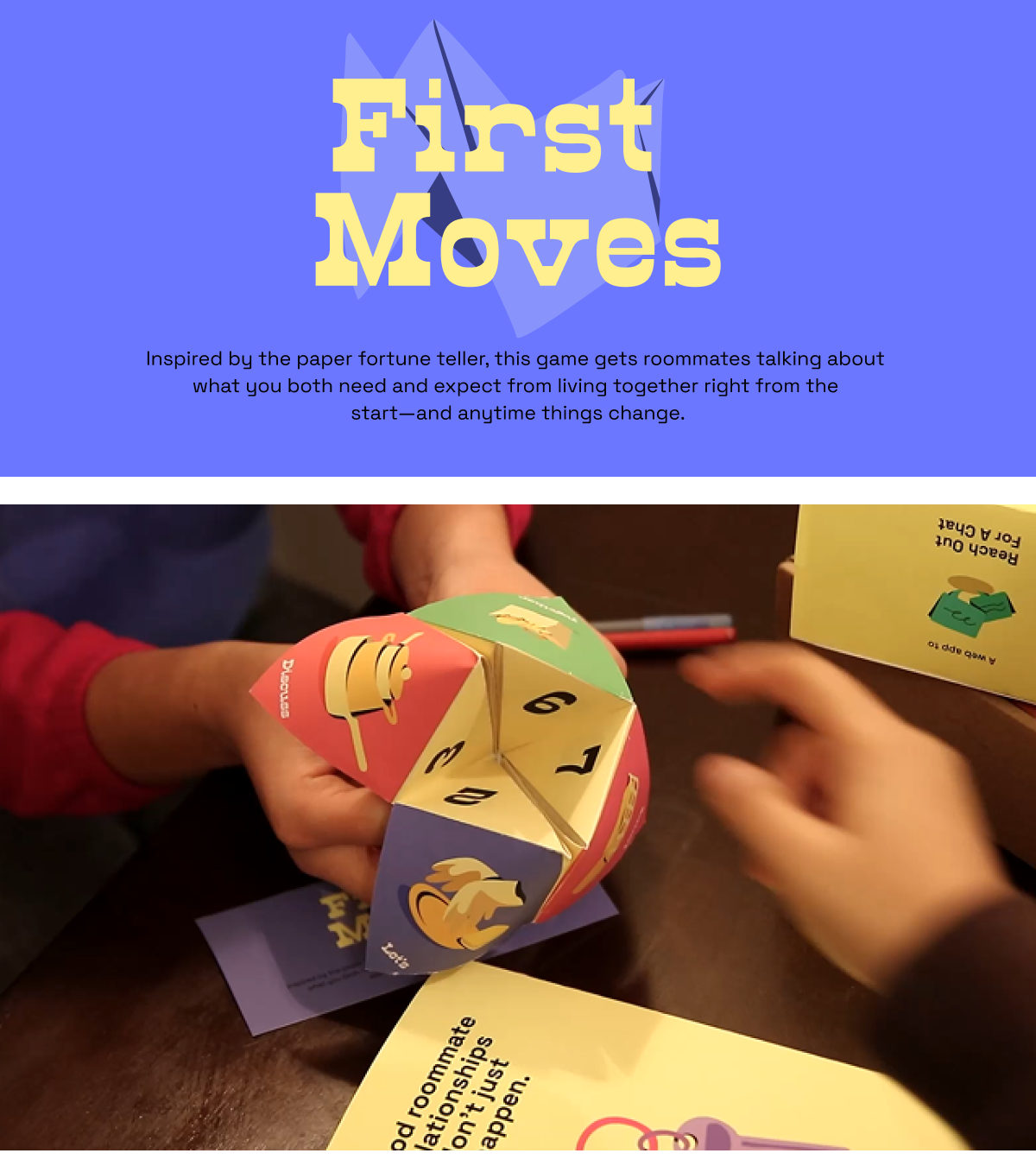
How It Works: An interactive fortune-teller game played at move in and replayed as needed to help roommates set and update goals and communication preferences.
Design Justification: Addresses initiation gaps and fosters relationship investment with a playful, structured way to start awkward conversations.
Supports: Goal setting
Find The Beat
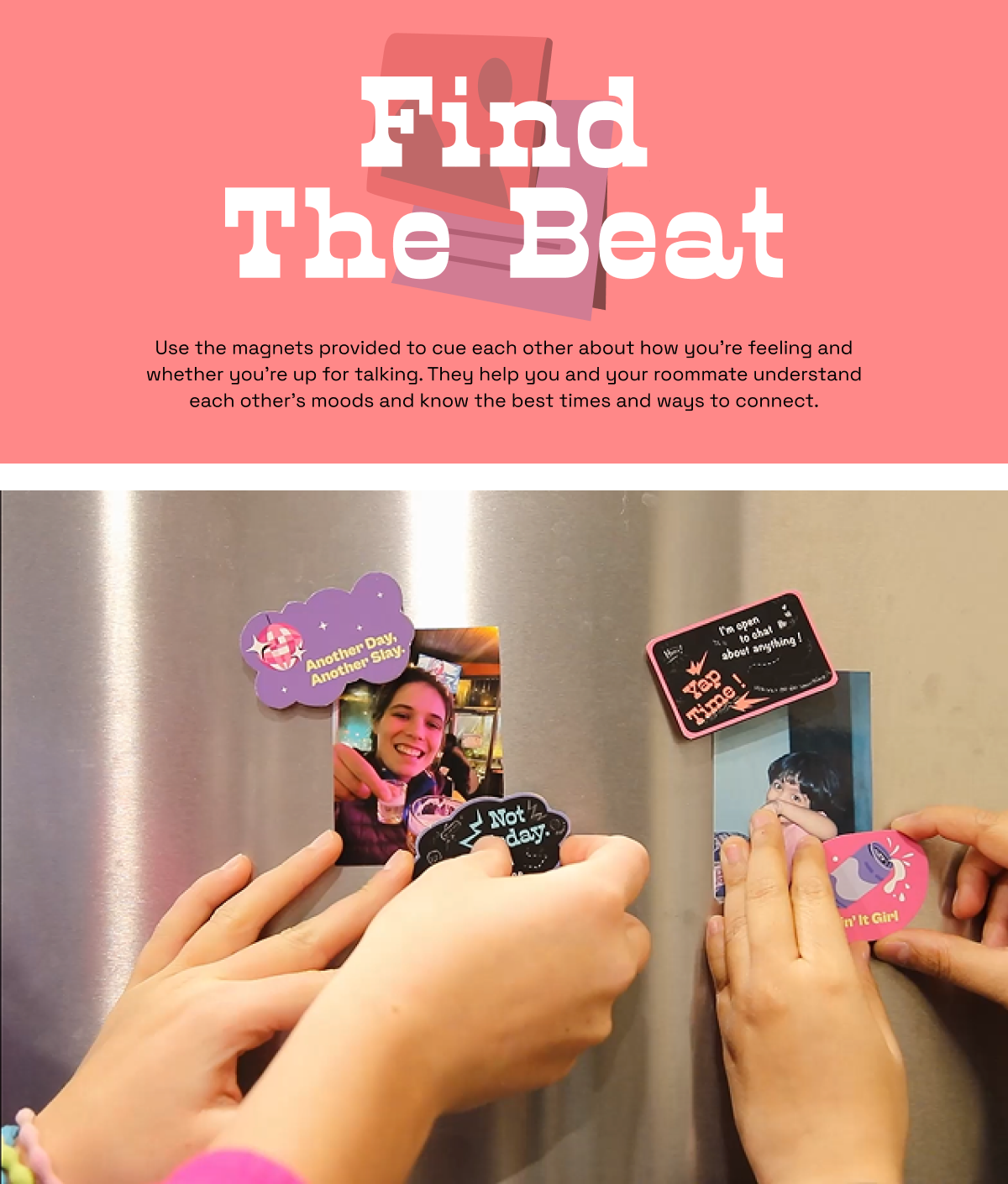
How It Works: Each day, roommates place magnets showing their emotions and readiness to talk on their photo on the fridge to signal their current state to each other.
Design Justification: Supports roommates in timing conversations and navigating communication styles through passive, visible signals that enable easy, ongoing communication without verbal pressure.
Supports: Daily relationship maintenance and guides timing for action and negotiation.
Reach Out
How It Works: A roommate signals they want to talk by placing the “We need to talk” magnet on their roommate’s photo. The magnet’s QR code links to a web app where they can send a text card to start the conversation.
Design Justification: This reduces hesitation to start difficult conversations. Magnets and QR codes provide an easy, visible way for one roommate to signal they want to talk.
Supports: Initiating hard conversations.
How They Work Together
The three parts work together across the roommate lifecycle. This approach emerged from research showing conflicts stem from changed circumstances without renegotiated expectations.
Move-In: Use the First Moves fortune teller to set goals and build investment.
Daily: Use Find the Beat magnets for awareness and passive communication.
As Needed: Gauge readiness with magnets, then use Reach Out to guide tough talks.
When Things Change: Replay First Moves to renegotiate expectations.

Reflection
Designing for roommate conflict turned out to be far more complex than I expected. User research and system mapping were essential in guiding my design process to navigate this complexity effectively.
back to case studies